What Happened to Carl Reiner, Comedy Legend?
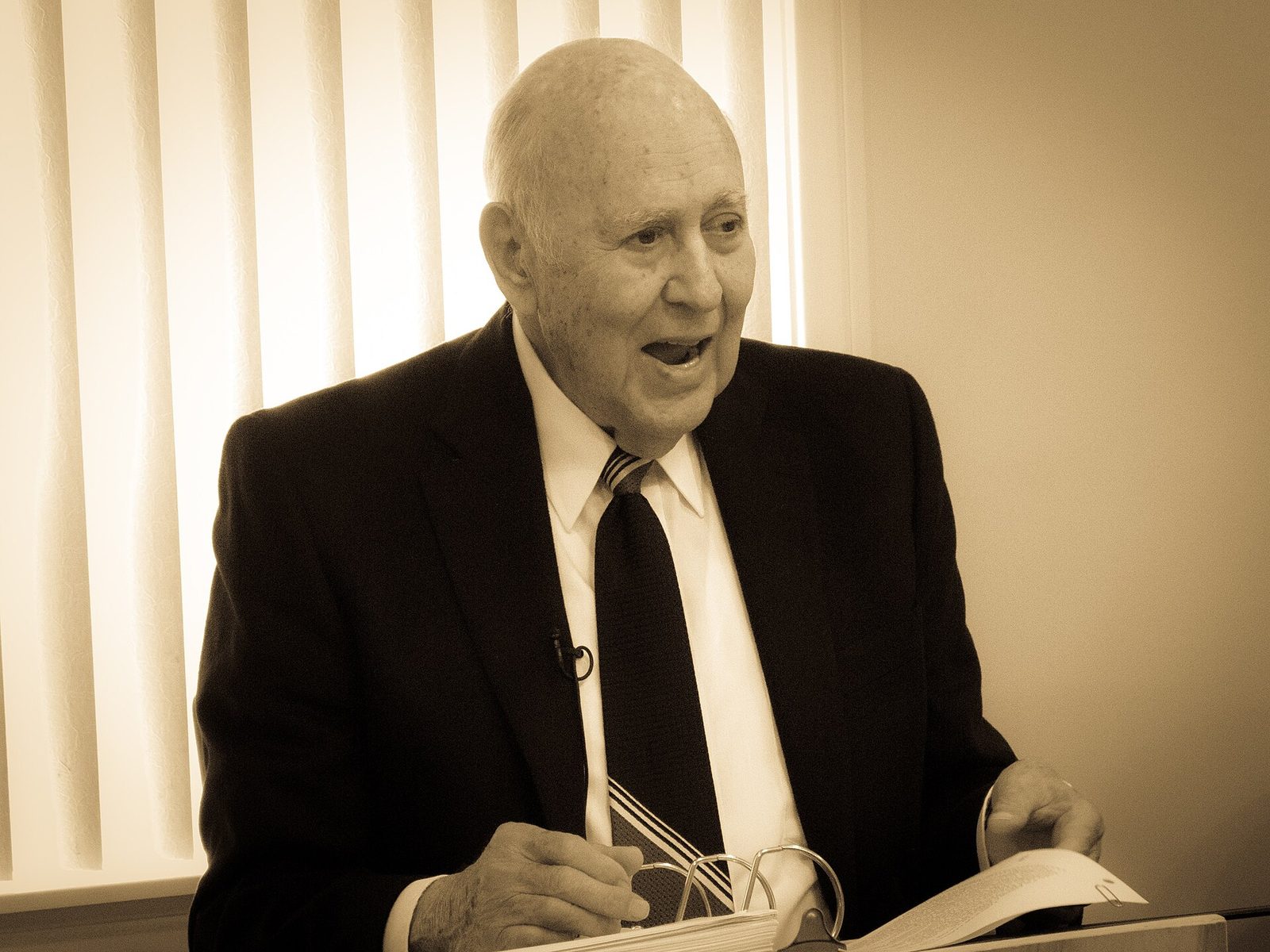
A Bronx Boy in the Army
Carl Reiner was born on March 20, 1922, in the Bronx, New York, the son of Bessie Mathias and Irving Reiner, a watchmaker, Jewish immigrants who had come to America from Romania and Austria, and the boy grew up in a crowded, noisy, funny household, the kind that produces comedians, and he graduated from high school at sixteen and worked as a machinist while studying acting, and his first exposure to the stage came through a dramatic workshop run by the Depression-era Works Progress Administration, which gave him the acting bug and the training to follow it. He entered the Army during the Second World War and toured South Pacific bases in GI revues, entertaining troops, and the touring taught him the craft of making an audience laugh in a tent, in the heat, with nothing but timing and nerve, and the lesson stayed with him for the rest of his life.
After the war he landed a part in the GI revue Call Me Mister, and in 1948 he appeared in the Broadway musical revue Inside U.S.A., starring Beatrice Lillie and Jack Haley, and in 1949 he made his Broadway debut proper, and the stage was his first home, and the stage taught him the discipline that television would later reward. The producer-director Max Liebman cast him in the 1950 Broadway show Alive and Kicking, and Liebman saw something in the young comic, a steadiness and a generosity as a performer, and hired him as the emcee and a performer on NBC's comedy and variety program Your Show of Shows, and the hiring changed Reiner's life, and it changed television, because Your Show of Shows was the school where modern American comedy was invented.
Your Show of Shows
Your Show of Shows ran from 1950 to 1954, a ninety-minute live variety show starring Sid Caesar and Imogene Coca, and Reiner joined it in the middle of its first season, and he became central to the comedy portions of the show, playing the straight man, the foil, the second banana, and doing it so well that he won two Emmy Awards for supporting actor, in 1956 and 1957, for his work on Caesar's Hour, the follow-up show. The writers' room was the most famous in television history, and Reiner worked alongside Mel Brooks, Neil Simon, his brother Danny Simon, Larry Gelbart and Mel Tolkin, and the room was a daily masterclass in joke writing, and Reiner was both a student and a teacher in it, and the friendships he made there lasted for the rest of his life, above all the friendship with Mel Brooks, which began in 1950 and never ended.
Reiner was nominated for an Emmy thirteen times in all, and he won nine, three as an actor, four as a writer and two as a producer, and the nine are the measure of a career that touched every part of television comedy. He continued on with Sid in Caesar's Hour from 1954 to 1957, and he was, by then, one of the most respected comic minds in the business, a man who could write a sketch, perform a sketch, and produce a show, and who did all three without ego, and the lack of ego was the thing that made him indispensable, because the great comic talents of his generation were, mostly, difficult men, and Reiner was the one who made them all better, and who never needed the credit.
The 2000 Year Old Man
The most famous thing Reiner ever did with Mel Brooks began as a joke at a party, because Brooks would play a 2,000-year-old man, and Reiner would interview him about the historical events he had witnessed, and the improvised banter was so funny that a tape recording of it led to television appearances and eventually to five comedy albums between 1961 and 1997, one of which won a Grammy Award. The routine was the purest form of Reiner's talent, because he was the straight man, asking the questions, setting up the jokes, and making Brooks funnier by being serious, and the seriousness was the comedy, and the comedy was the friendship, and the friendship was the thing that made the albums work, because the two men had been best friends since 1950, and the best friendship was audible in every exchange.
Brooks paid tribute to Reiner when he died, writing that Carl was a giant, unmatched in his contributions to entertainment, and that he had created comedy gems like The Dick Van Dyke Show, The Jerk and Where's Poppa, and that he had met him in 1950 when he joined Sid Caesar on Your Show of Shows and they had been best friends ever since, and the tribute was the truth, because the friendship was the longest and most productive in American comedy, and it outlived the shows and the films and the albums, and it lasted until Reiner's death, when Brooks, at ninety-four, lost the friend he had made seventy years earlier, and the loss was the end of an era in comedy.
The Dick Van Dyke Show
In 1961 Reiner created and produced The Dick Van Dyke Show, and the show was the masterpiece of his career, because it was based on his own life as a television writer working for Sid Caesar, and it turned that life into the most elegant sitcom ever made, a show about a comedy writer named Rob Petrie, played by Dick Van Dyke, and his wife Laura, played by Mary Tyler Moore, and the writers' room where Rob worked, and the show ran from 1961 to 1966, and it won fifteen Primetime Emmy Awards, and Reiner himself won five of them, three for writing and two as the producer, and the show won Emmys for writing in its first three years and for producing in its last two, and it is still, sixty years later, the model of what a sitcom can be.
The show almost did not happen, because Reiner first wrote and starred in his own pilot, called Head of the Family, based on his experiences as a TV writer, and the pilot was not picked up, and CBS only bought the show when Dick Van Dyke was recast in the lead, and Van Dyke got the role over Johnny Carson, who was then a game show host of no great note, and the casting was the making of the show, because Van Dyke was in the smash Broadway musical Bye Bye Birdie, and he brought a physical grace to the role that no one else could have, and Mary Tyler Moore and Rose Marie and Morey Amsterdam completed the cast, and Reiner himself played Alan Brady, the abrasive, Sid Caesar-like star who employed Van Dyke's character, and the Alan Brady role was the joke that only the insiders got, because Brady was Caesar, and Reiner was playing his old boss, and the playing was affectionate, and the affection was the point.
Directing Steve Martin and George Burns
After The Dick Van Dyke Show ended, Reiner turned to directing feature films, and his first was Enter Laughing in 1967, an adaptation of the play that had been adapted from his own 1958 semi-autobiographical novel about a stage-struck delivery boy from the Bronx who decides to become an actor, and the film was the story of his own life, told as a comedy, and it was followed by Where's Poppa in 1970, and then by the hugely successful George Burns vehicle Oh, God! in 1977, in which Burns played God as a folksy old man in a baseball cap, and the film was a hit, and it made Burns a movie star again at eighty-one. Reiner then directed four comedy films in the early career of Steve Martin, The Jerk in 1979, Dead Men Don't Wear Plaid in 1982, The Man with Two Brains in 1983, and All of Me in 1984, and the four films made Martin a movie star, and the making was Reiner's doing, because he was the director who understood Martin's talent and gave it room to grow.
He also directed Summer Rental in 1985, Sibling Rivalry in 1990, and his final film, the romantic comedy That Old Feeling in 1997, starring Bette Midler and Dennis Farina, and the directing career was the second act of a life that had already had a first act in television, and the second act was as successful as the first, because Reiner was a director who trusted his actors and his material, and who never got in the way of a joke, and the films are still funny, and the funniness is the proof that the director understood comedy better than almost anyone of his generation. He wrote two other screenplays that were made into films, The Thrill of It All in 1963 and The Art of Love in 1965, and he worked on Broadway too, writing and directing the farce Something Different in 1967 and directing Tough to Get Help in 1972 and The Roast in 1980, although the Broadway work was less successful than the film and television work, and the failures did not matter, because the successes were so large.
A Second Act That Never Ended
Reiner never really retired, because he kept acting and guest-starring into his nineties, appearing in the 1990 film The Spirit of '76, directed by his son Lucas, and in Slums of Beverly Hills in 1998, and in all three films of the Ocean's Eleven series, and on television in Frasier, Mad About You, Ally McBeal, Boston Legal, House, Two and a Half Men, Hot in Cleveland, Family Guy, American Dad, King of the Hill and Bob's Burgers, and he won his last Emmy for a guest appearance as Alan Brady on an episode of Mad About You in 1995, bringing the character back thirty years after The Dick Van Dyke Show had ended, and the return was the proof that the character had never left him, and that the show had never left the audience either.
The honors came late and they came often, because in 1995 Reiner received the Writers Guild's Laurel Award, a lifetime achievement award for a career in television writing, and in 2000 he won the Mark Twain Prize for American Humor, and in 2009 he was presented with the Writers Guild's Valentine Davies Award, and the awards were the establishment's recognition of a career that had run for seventy years, and that had shaped American comedy in every medium, and Reiner accepted them with the same modesty he had shown all his life, thanking the writers and the actors and the friends, and never taking the credit for himself, and the modesty was genuine, because he had always been the man who made other people funnier, and who was happy to let them take the bow.
What Happened to Carl Reiner, in the End
So what happened to Carl Reiner? He was born in the Bronx in 1922, the son of a watchmaker, and he graduated from high school at sixteen, and he served in the Army in the Second World War, touring South Pacific bases in GI revues, and he appeared on Broadway in Call Me Mister and Inside U.S.A., and he joined Sid Caesar on Your Show of Shows in 1950, and he met Mel Brooks, and he won two Emmys for Caesar's Hour, and he recorded the 2000 Year Old Man albums, and he created The Dick Van Dyke Show in 1961, and he won five Emmys for it, and he directed Enter Laughing and Oh, God! and The Jerk and All of Me, and he won the Mark Twain Prize in 2000, and he appeared in the Ocean's films, and he played Alan Brady one last time on Mad About You, and he voiced a character in Toy Story 4, his final film role, and he was married to Estelle Lebost, a singer and actress, from 1943 until her death in 2008, and he had three children, Rob, Sylvia Anne and Lucas, and he died on June 29, 2020, at 98, of natural causes, at his home in Beverly Hills.
He is survived by his children, and by his grandchildren, and by the shows and the films and the albums, and by the friendship with Mel Brooks, which Brooks mourned publicly, and by the reputation of a man who was, as Brooks said, a giant, unmatched in his contributions to entertainment, and who created comedy gems, and who was, whether he wrote or performed or was simply a best friend, the best at it, and who will be greatly missed, and who is, still, the dean of American television comedy, the man who wrote it, performed it, directed it and produced it, and who did it all with decency and generosity, and who died, in the end, at 98, at home, in Beverly Hills, having lived long enough to see his work become the foundation of everything that came after it.
Frequently asked questions
What happened to Carl Reiner?
Carl Reiner died of natural causes at his home in Beverly Hills, at the age of 98. He had remained active well into his nineties, including a voice role in an animated film in his final year.
What did Carl Reiner create?
He created The Dick Van Dyke Show, one of the most acclaimed sitcoms ever made, and he directed hit films including Oh, God!, The Jerk and All of Me.
How many Emmy Awards did Carl Reiner win?
Nine, across acting, writing and producing. Five of them were for The Dick Van Dyke Show, with the rest coming from his work with Sid Caesar and a guest appearance as Alan Brady.
Who was Carl Reiner's comedy partner?
Mel Brooks was his closest friend and comedy partner for seven decades. Together they created the routines about a very old man being interviewed, which became a series of hit comedy albums.
What films did Carl Reiner direct?
His best-known films are Enter Laughing, Where's Poppa, Oh, God! with George Burns, and four Steve Martin comedies: The Jerk, Dead Men Don't Wear Plaid, The Man with Two Brains and All of Me.
Was Carl Reiner on Your Show of Shows?
Yes, he was a regular cast member on Sid Caesar's Your Show of Shows and its follow-up, Caesar's Hour, working alongside writers including Mel Brooks, Neil Simon and Larry Gelbart.
Who were Carl Reiner's children?
His three children are director and actor Rob Reiner, poet and playwright Sylvia Anne Reiner, and painter and director Lucas Reiner.
What was Carl Reiner's last film role?
He voiced a character in Toy Story 4, the animated sequel, which was released in his final year and became his last screen credit.
Sources
- BroadwayWorldDied June 29 2020 natural causes Beverly Hills, nine Emmys, Dick Van Dyke Show, The Jerk, Mark Twain Prize 2000
- Legacy.comBronx birth 1922, Army service, Your Show of Shows, 2000 Year Old Man, Dick Van Dyke Show 1961-1966
- Jewish Virtual LibraryNine Emmys and one Grammy, Enter Laughing, Oh God, four Steve Martin films, last Emmy Mad About You 1995