What Happened to Buster Keaton, Stone Face?
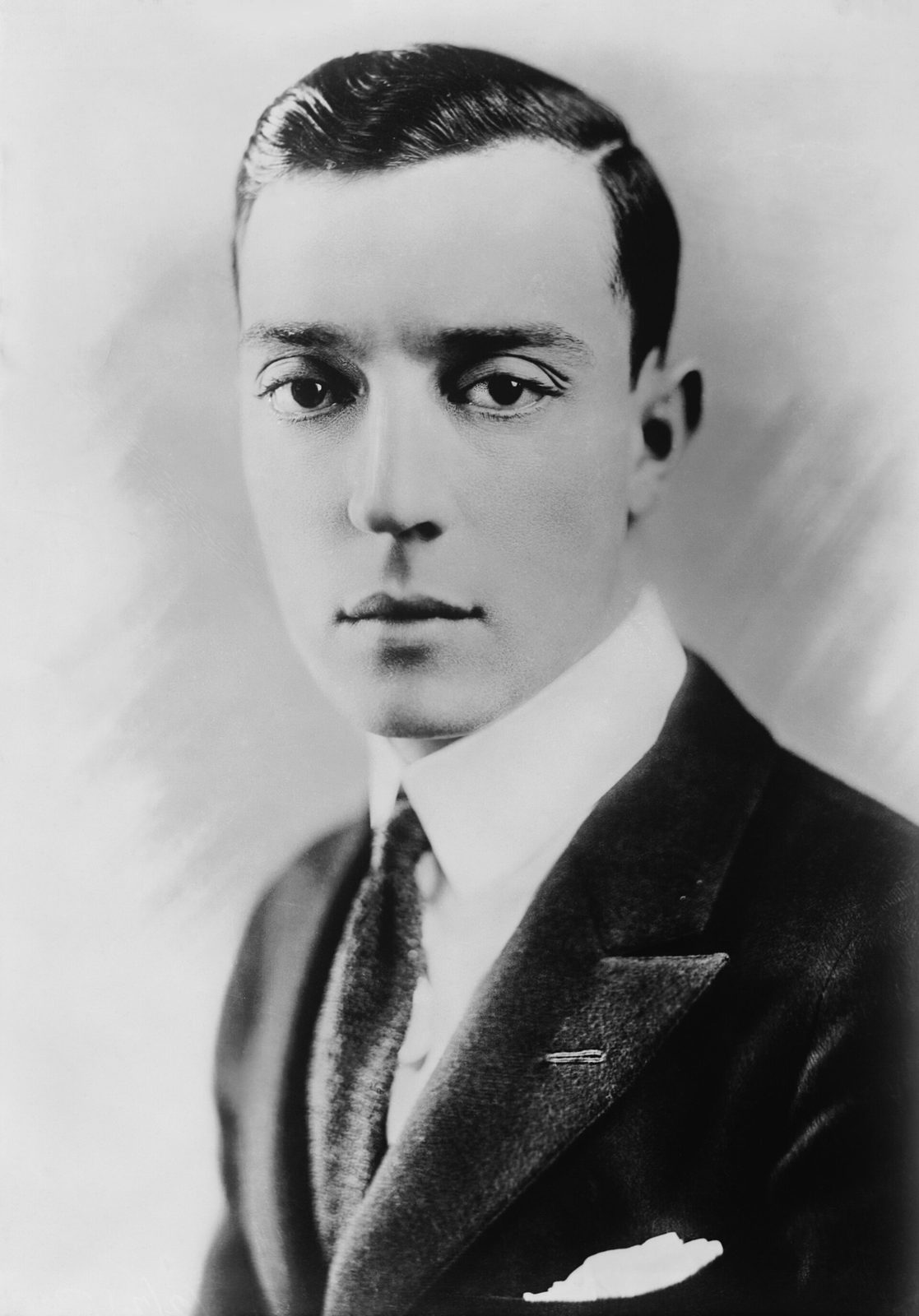
A Vaudeville Baby from Kansas
Buster Keaton was born Joseph Frank Keaton on October 4, 1895, in Piqua, Kansas, into a vaudeville family, the son of Joe Keaton and Myra Cutler, and he was, from the very start, a performer, because his parents put him in the family act, The Three Keatons, when he was three years old, and the act was a rough one, in which his father threw him around the stage, and the boy learned, before he could read, how to take a fall, and how to land without hurting himself, and how to keep a straight face while the audience roared, and the story goes that he got the name Buster from Harry Houdini, who saw the baby fall down a flight of stairs without crying, and said, what a buster, and the name stuck, and the boy became, in the end, Buster Keaton, and the face that never smiled became, in the end, the most famous face in comedy, after Chaplin's, and the body that could fall without breaking became, in the end, the instrument of some of the greatest films ever made.
He left vaudeville in 1917, when he was twenty-one, and he met Roscoe Arbuckle, the great silent comedian, and Arbuckle put him in films, and Keaton learned the camera the way he had learned the stage, by doing it, and by watching, and by trying things no one else would try, and he served in the First World War, in France, with the 40th Infantry Division of the United States Army, and he came home, and he went back to films, and by 1920 he had his own production company, under contract with Joseph Schenck, and he had, in the end, eight years of freedom, from 1920 to 1928, in which he made the films that made him immortal, and in which he was his own boss, and his own director, and his own stuntman, and his own star, and no comedian in history has ever had a run like it, and no comedian has ever used it better.
The Great Stone Face and the Silent Masterpieces
Keaton's trademark was physical comedy with a stoic, deadpan expression, and the nickname the Great Stone Face fitted him, because he never smiled on screen, no matter what happened to him, and what happened to him was extraordinary, because he was thrown from trains, and buried in avalanches, and swept away by floods, and he did it all himself, and he did it, in the end, with a precision that no one else could match, and his feature films of the 1920s are, still, among the greatest comedies ever made, among them Our Hospitality in 1923, Sherlock Jr. in 1924, The Navigator in 1924, The General in 1926, Steamboat Bill, Jr. in 1928, and The Cameraman in 1928, and The General, his Civil War chase film, is, still, widely viewed as his masterpiece, and a worldwide poll by Sight and Sound ranked it among the greatest films of all time, and Orson Welles called it, in the end, the greatest comedy ever made, and perhaps the greatest film ever made, and Keaton, who had made it for laughs, lived to see it called a work of art.
He fractured his neck while filming Sherlock Jr. in 1924, and he did not know it until a doctor saw the X-rays during a routine physical examination many years later, and the fact tells you everything about how he worked, because he did his own stunts, and he took the falls, and he got up, and he went on, and he never complained, and he never asked for a double, and the films are, in the end, a record of a man risking his body for a laugh, and the laughs are, in the end, bigger because the danger is real, and the audience knows it, even if it does not know why, and the American Film Institute ranked him, in 1999, as the 21st-greatest male star of classic Hollywood cinema, and Entertainment Weekly ranked him as the seventh-greatest director of all time, and both rankings are, in the end, too low, because there has never been another filmmaker who could do what Keaton did, and there never will be.
MGM, the Fall, and the Drinking
Keaton's career declined after 1928, when he signed with Metro-Goldwyn-Mayer and lost his artistic independence, and the decision was, in the end, the worst of his life, because MGM would not let him direct, and would not let him write, and would not let him do his own stunts, and the studio interfered with everything, and the films got worse, and the money got worse, and his marriage got worse, and he turned to drink, and the drinking turned into alcoholism, and the alcoholism turned into blackouts, and he was fired from MGM on February 2, 1933, after a drunken outburst at a party involving Louis B. Mayer, and his career as a leading man in feature films was, in the end, over, and he was thirty-seven years old, and he had been, eight years earlier, the most admired comedian in the world, and now he was, in the end, unemployable, and drunk, and divorced, or about to be, and the fall was, in the end, as sudden as one of his pratfalls, and far less funny.
His first marriage, to Natalie Talmadge, whom he married on May 31, 1921, had been a disaster for years, and it ended in divorce in 1932, and Natalie legally changed the names of their two sons, Joseph and Robert, and Keaton lost his wife, and his sons, and his studio, and his money, all at once, and he sank deeper into alcoholism, and he was institutionalised, and he escaped, and he married his nurse, Mae Scriven, in 1933, in what he later called a blackout marriage, and they divorced in 1936, and he underwent aversion therapy, and he achieved five years of sobriety by 1935, and he worked, in the end, as a gag writer for other comedians, and as a supporting player, and he was, in the end, a long way from the man who had made The General, and the men who had known him then could hardly believe what had happened to him, and neither, in the end, could he.
Eleanor Norris and the Long Climb Back
Stability came on May 29, 1940, when Keaton married Eleanor Norris, a twenty-one-year-old dancer, and the marriage lasted until his death, and Eleanor was, by every account, the person who saved his life, because she stopped his heavy drinking, and she managed his business, and she gave him, in the end, the steady home he had never had, and the two of them were married for twenty-six years, and she was with him, in the end, when he died, and she was, in the end, the reason he lived long enough to be rediscovered, and to be honoured, and to know, before he died, that the world had not forgotten him, and that the films he had made in the 1920s were being called masterpieces, and that the young filmmakers of the 1960s were studying them, and stealing from them, and worshipping them, and that he was, in the end, not a has-been, but a master, and that the world had finally caught up with him.
He returned to MGM in the 1940s as a writer and gagman for Red Skelton and Lucille Ball, and he played small parts in films, among them a famous cameo in Sunset Boulevard in 1950, in which he played himself, a silent star playing cards with other silent stars, and he hosted The Buster Keaton Show on television, and he appeared on talk shows and in commercials, and he made his last starring role in 1946, in a Mexican science-fiction film, and he sold his Beverly Hills home to the actor James Mason in 1954, and he wrote his autobiography, My Wonderful World of Slapstick, in 1957, and a film biography, The Buster Keaton Story, was made in 1957, and the revival of interest in silent films in the 1950s and 1960s brought his work back before the public, and he enjoyed, in the end, a resurgence in popularity towards the end of his life, and he was, in the end, feted, and honoured, and loved, and he knew it, and it mattered to him, and it kept him going, and it kept him working, until the very end.
The Honorary Oscar and the Last Films
Keaton received an Academy Honorary Award in 1959, for his unique talents and contributions to the cinema, and the award was presented at the 32nd Academy Awards in 1960, and it was, in the end, the first great honour of his old age, and it was followed by others, and the Venice Film Festival honoured him in September 1965, and he received a tumultuous standing ovation, and he was, by then, seventy years old, and ill, and he knew he was ill, and he kept working anyway, and his last film roles came in 1966, in A Funny Thing Happened on the Way to the Forum, in which he insisted on doing his own stunts, despite his illness, and in The Scribe, a Canadian safety film, completed shortly before his death, and he was, in the end, still the man who did his own stunts, and still the man who never smiled, and still the man who fell down, and got up, and the last films are, in the end, a sad and fitting end to a career that had begun, sixty-seven years earlier, with a three-year-old boy being thrown around a vaudeville stage by his father.
He had been a lifelong heavy smoker, and he died of lung cancer, and the doctors had not told him how ill he was, and he believed he was recovering from bronchitis, and he remained active and alert in his final days, walking around the hospital and playing cards with visitors, and he died quietly at home, in his sleep, shortly after playing cards with his wife, on February 1, 1966, and he was seventy years old, and he was buried at Forest Lawn Memorial Park in Hollywood Hills, California, and he died on the same day as his old co-star Hedda Hopper, and the tributes came from everywhere, and Roger Ebert called him the greatest actor-director in film history, and the International Buster Keaton Society, founded in 1992, still preserves his work, and his films are, still, shown, and studied, and laughed at, and loved, all over the world, and they will be, in the end, for as long as there are movies, and for as long as there are people who love them.
Three Marriages and Two Sons
Keaton was married three times. His first wife was Natalie Talmadge, the sister of the actresses Norma and Constance Talmadge, and the sister-in-law of his producer Joseph Schenck, whom he married on May 31, 1921, after a whirlwind romance on the set of Our Hospitality, and with whom he had two sons, Joseph and Robert, and the marriage collapsed as his career collapsed, and Natalie divorced him in 1932, and she changed the boys' names, and Keaton lost, in the end, his family as well as his career, and his second wife was Mae Scriven, a nurse, whom he married in 1933, during his alcoholic blackout period, and the marriage lasted three years, and they divorced in 1936, amid infidelity scandals, and his third wife was Eleanor Norris, whom he married on May 29, 1940, and who was twenty-three years younger than him, and who remained his wife until his death in 1966, and who was, in the end, the wife who mattered, and the wife who saved him, and the wife who is, still, remembered, by everyone who knew them, as the reason he survived.
His sons, Joseph and Robert, grew up apart from him, and the family was, in the end, broken by the divorce, and by the drinking, and by the money, and Keaton, who had been thrown around a stage by his own father, was, in the end, a father who lost his sons, and who never quite got them back, and the story is, in the end, a sad one, and it is, in the end, the other side of the comedy, because the man who made the world laugh could not make his own family work, and could not stop drinking, and could not keep his studio, and could not, in the end, do anything but keep falling down, and getting up, and falling down again, and the films are, in the end, the record of that, and the life is, in the end, the proof of it, and both are, in the end, Buster Keaton, and both are, in the end, true.
What Happened to Buster Keaton, in the End
So what happened to Buster Keaton? He was born in Piqua, Kansas, in 1895, he joined the family vaudeville act at three, he met Roscoe Arbuckle in 1917, he served in France in the First World War, he got his own production company in 1920, he made Our Hospitality in 1923, he made Sherlock Jr. in 1924, he made The General in 1926, he made Steamboat Bill, Jr. in 1928, he signed with MGM in 1928, he was fired by MGM in 1933, he divorced Natalie Talmadge in 1932, he married Mae Scriven in 1933, he divorced her in 1936, he married Eleanor Norris in 1940, he received an Honorary Oscar in 1959, he was honoured at Venice in 1965, he made A Funny Thing Happened on the Way to the Forum in 1966, and he died on February 1, 1966, at 70, of lung cancer, at his home in Woodland Hills, California.
He was buried at Forest Lawn Memorial Park in Hollywood Hills, and he is, still, the Great Stone Face, and the man who made The General, and Sherlock Jr., and The Cameraman, and who is, still, ranked among the greatest directors who ever lived, and the greatest comic actors who ever lived, and who is, still, the man who never smiled, and who made the world laugh, and who is, still, remembered, by everyone who loves the movies, as the man who fell down, and got up, and fell down again, and who did it, in the end, better than anyone, and who was, in the end, seventy years old, and who had lived, in the end, a life that was, in the end, a comedy, and a tragedy, and a masterpiece, all at once, and who was, in the end, Buster Keaton, and who is, still, Buster Keaton, and who will be, in the end, for as long as there are movies.
Frequently asked questions
What happened to Buster Keaton?
Buster Keaton died on February 1, 1966, at 70, of lung cancer, at his home in Woodland Hills, California. He believed he was recovering from bronchitis, as doctors had not told him how serious his condition was. He was buried at Forest Lawn Memorial Park in Hollywood Hills.
What was Buster Keaton most famous for?
His silent films, especially The General (1926), Sherlock Jr. (1924), Our Hospitality (1923), Steamboat Bill, Jr. (1928) and The Cameraman (1928). His trademark was physical comedy with a deadpan expression, earning him the nickname the Great Stone Face.
Why did Buster Keaton's career collapse?
He signed with MGM in 1928 and lost his artistic independence. Studio interference, worsening alcoholism and a collapsing marriage followed, and MGM fired him in 1933, ending his career as a leading man in feature films.
Did Buster Keaton win an Oscar?
He received an Academy Honorary Award in 1959 for his unique talents and contributions to the cinema. He was never nominated for a competitive Oscar.
Was Buster Keaton married three times?
Yes. Natalie Talmadge (1921-1932), with whom he had two sons, Joseph and Robert; Mae Scriven (1933-1936); and Eleanor Norris (1940 until his death in 1966), who is credited with saving his life by stopping his drinking.
Did Buster Keaton serve in the First World War?
Yes. He served in France with the 40th Infantry Division of the United States Army. He had joined the army at 21, after leaving vaudeville and meeting Roscoe Arbuckle.
What was Buster Keaton's last film?
A Funny Thing Happened on the Way to the Forum (1966), in which he insisted on doing his own stunts despite ill health. His final screen role was in The Scribe (1966), a Canadian safety film completed shortly before his death.
Did Buster Keaton really break his neck filming Sherlock Jr.?
Yes. He fractured his neck during a stunt in Sherlock Jr. (1924) and did not learn about it until a doctor saw X-rays of his neck during a routine physical examination many years later.
Sources
- EN WikipediaBirth, vaudeville, Arbuckle, MGM, marriages, Honorary Oscar, death
- TCMRise, MGM fall, Eleanor Norris, Venice honour, death
- WikiTreeBirth, death, lung cancer, final role, burial