What Happened to Brian Keith, Uncle Bill?
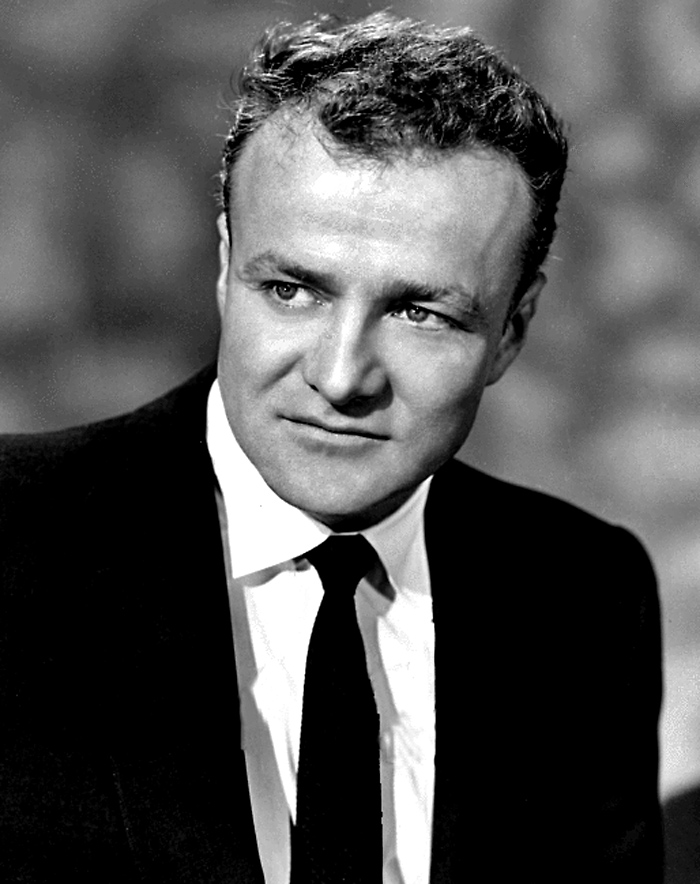
Born Into the Business
Robert Alba Keith was born on November 14, 1921, in Bayonne, New Jersey, to the actor Robert Keith and the stage actress Helena Shipman, a native of Aberdeen, Washington, and he was, from the start, a child of the theater, and of the movies, and he made his film debut at the age of three, in Pied Piper Malone in 1924, a fact that has become, in time, one of the most quoted details of his life, because it says, in a single line, who he was: a man who had been acting, quite literally, for as long as he could remember, and who would keep acting, for the next seventy-three years, until the very end. He joined the United States Marine Corps in 1942, and served until 1945, during World War II, as a radioman and tail gunner in the rear cockpit of a two-man Douglas SBD Dauntless dive bomber, in a Marine squadron, and he was awarded the Combat Aircrew Insignia, and the Air Medal, and the Asiatic-Pacific Campaign Medal with three battle stars, and the World War II Victory Medal.
After the war, he made his Broadway debut in 1948, in the ensemble of Mister Roberts, which starred his father as Doc, and he worked, in the late 1940s and early 1950s, in the theater, and on television, in the live dramas of the era, in Suspense, and Police Story, and Tales of Tomorrow, and Studio One, and he made his feature film debut in a Western for Paramount, Arrowhead, in 1953, and he stayed, for the next decade, a working actor, in films and on television, in westerns and dramas and comedies, in the kind of roles that never made a star but that kept a working actor working, and that built, over years, a reputation as a man who could play anything, and who could make it believable, and who was, in the end, going to be famous, not for one role, but for many, and for a career that ran, without stopping, for six decades.
The Westerner and Disney
In 1955 Keith starred in his own series, Crusader, as the fictional journalist Matt Anders, for 52 episodes, and in 1960, he won acclaim for his starring role in Sam Peckinpah's short-lived, hard-bitten western series The Westerner, which aired for only 13 episodes, and of which Keith later said, Only four or five of those were any good, but those four or five were as good as anything anybody has ever done. He supported Paul Newman in The Young Philadelphians in 1959, and he made two productions for Disney, the television show Elfego Baca: Move Along, Mustangers, and the feature Ten Who Dared in 1960, and then, in 1961, he made the film that would make him famous to a generation of children, and their parents, and that would, in time, become one of the most beloved family films ever made.
The Parent Trap, in 1961, starred Hayley Mills as the twins, Susan and Sharon, and Maureen O'Hara as their mother, and Keith as Mitch Evers, their father, a man who was warm, and funny, and entirely believable, and who became, for millions of viewers, the father they wished they had, and the film was a huge hit, and it made Keith, at 39, a Disney star, and it gave him, in Mitch Evers, a character that would follow him for the rest of his life, in the way that great characters always do. He did two more films for Disney, Moon Pilot in 1962, and Savage Sam in 1963, and he guest-starred, in the early 1960s, on The Untouchables, and The Virginian, and The Fugitive, and Wagon Train, and 77 Sunset Strip, and he was, by 1966, a familiar face on American television, and a man who was about to get the role that would define him, and that would, in the end, earn him three Emmy nominations, and make him a household name.
Uncle Bill Davis, 1966 to 1971
In 1966 Keith landed the role of Uncle Bill Davis on CBS's popular television situation comedy Family Affair, as the bachelor uncle who takes in his late brother's three orphaned children, Buffy, Jody, and Cissy, and tries to raise them, with the help of his butler, Mr. French, played by Sebastian Cabot, in a luxurious Manhattan apartment, and he played the role for five seasons, from 1966 to 1971, in 138 episodes, and he earned, for the role, three Emmy Award nominations for Best Actor in a Comedy Series, in 1967, 1968, and 1969, without ever winning one, a record that has become, in time, part of his legend, because he was, quite simply, that good, and because the Emmys, in those days, rarely rewarded the man who played the father.
Family Affair was an immediate hit, ranking number 15 in the Nielsen ratings in its first season, and it made Keith a household name, and it made Uncle Bill into one of the most beloved characters on television, a man who was gruff, and warm, and funny, and who loved the children, and who was, in the end, the father they needed, and the father the audience wished they had. Kathy Garver, who co-starred as Cissy, later said that Keith was a cultural Irishman, and that he went through many manifestations during the five years they shot, and that he was, at first, up, and then, in his second year, going through a divorce, and then, in his third year, he met somebody else, and became more anecdotal, and told stories, and loved kids, and was very outspoken about those he did not like, and that he was, in the end, a very interesting character, and a very good actor, and a man who made the show work, by being, quite simply, himself.
Theodore Roosevelt and Hardcastle
After Family Affair, Keith starred as the pediatrician Dr. Sean Jamison in The Brian Keith Show, on NBC from 1972 to 1974, and as Steven The Fox Halliday in the six-part miniseries The Zoo Gang in 1974, and as Lew Archer in the series Archer in 1975, and he was third billed in The Yakuza in 1974, and in The Wind and the Lion in 1975, in which he played President Theodore Roosevelt, for the writer and director John Milius, a performance that has become, in time, one of his most admired, because he played Roosevelt as a man who was, above all, alive, and funny, and entirely believable, and who was, in the end, the president the audience wished they had. He spoke fluent Russian, which led to his casting as a Soviet scientist in Meteor in 1979, and as the Soviet premier in the NBC miniseries World War III in 1982, and he replaced Barnard Hughes on Broadway in Da, and he kept working, year after year, in films and on television, without ever stopping, and without ever losing the gruff warmth that made him who he was.
In 1983 he returned to series television, with Hardcastle and McCormick, in the role of a cranky retired judge named Milton C. Hardcastle, opposite Daniel Hugh Kelly as the ex-con Mark McCormick, in an ABC crime drama with elements of comedy, and the chemistry between the two men was a hit, and the series lasted three years, until its cancellation in 1986, in 67 episodes, and it gave Keith, at 62, a second famous television role, and a second generation of fans, who knew him not as Uncle Bill but as the Judge, a man who was tough, and funny, and entirely his own. He starred in another short-lived series, Pursuit of Happiness, in 1987 and 1988, and in Heartland in 1989, and he had roles in Young Guns in 1988, and in Evening Shade in 1991, and in Star Trek: Deep Space Nine in 1993, as Mullibok, an elderly farmer who resists forcible relocation, and he kept working, into his seventies, because he had never learned how to stop, and because he did not want to.
Three Marriages, Seven Children
Keith was married three times, first to Frances Helm, from 1948 to 1954, then to Judy Landon, from 1954 to 1969, and then, from 1970 until his death, to Victoria Young-Keith, and he had seven children, a large family, by any measure, and one that was, by all accounts, the center of his life, even as his career took him from New York to Hollywood to Hawaii, where he moved in 1970, and back again. He was, by every account, a devoted father, and a devoted husband, and a man who kept his private life private, and who did not seek the spotlight off camera any more than he had sought it on, and who was, in the end, remembered, by his family, not as a television star but as a father, and a husband, and a man who loved them, and who was loved, in return.
His birth name is given as Robert Alba Keith by EN Wikipedia and by Find a Grave, although Film Reference gives it as Brian Michael Keith, a small disagreement that this article notes rather than resolving, because the record is, on this point, genuinely unclear, and because Keith deserves an accurate account. What is clear is that he was born on November 14, 1921, in Bayonne, New Jersey, that he was the son of an actor and a stage actress, that he made his film debut at three, that he served in the Marines, that he was married three times, that he had seven children, and that he was, for six decades, one of the hardest-working actors in Hollywood, a man who showed up, knew his lines, and made the scene work, and who did it, year after year, without ever stopping, and without ever complaining.
Daisy, Depression, and Malibu
On April 17, 1997, Keith's daughter Daisy died by suicide, and ten weeks later, on June 24, 1997, at the age of 75, Keith died of a self-inflicted gunshot wound, at his home in Malibu, California. The record gives the interval between the two deaths as both six weeks and ten weeks, in different places on the same page, but the dates, April 17 to June 24, make it ten weeks, and this article uses ten weeks, because the dates are clear, and because Keith deserves an accurate account. He suffered from emphysema and lung cancer during the latter part of his life, despite having quit smoking ten years earlier, and he reportedly struggled with financial problems, and suffered from depression throughout his final days, and he was, by every account, a man who had lost his daughter, and who could not bear it, and who took his own life, in the home he had shared with his family, in Malibu.
His friend Maureen O'Hara, his co-star in The Parent Trap and The Deadly Companions and The Rare Breed, did not believe he died as a result of suicide, and she stated, in an interview not long after his death, that he had a large gun collection, and that he might have been cleaning the gun, or looking at it, when it went off accidentally, and that she had just visited him, and that he was in good spirits, and that he would not have taken his own life, given his Catholic beliefs, and this article states her view plainly, because it is a part of the record, and because Keith deserves an honest account, not a smoothed-over one. His private funeral was attended by his Family Affair co-stars Kathy Garver and Johnny Whitaker, and by his Hardcastle and McCormick co-star Daniel Hugh Kelly, and his ashes were interred next to those of his daughter Daisy at Westwood Village Memorial Park Cemetery in Los Angeles, and on June 26, 2008, eleven years after his death, he received a posthumous star on the Hollywood Walk of Fame.
What Happened to Brian Keith, in the End
So what happened to Brian Keith? He became Uncle Bill Davis, he became Judge Hardcastle, he became Mitch Evers in The Parent Trap, he became Theodore Roosevelt in The Wind and the Lion, he was nominated for three Emmys and never won one, he was married three times, he had seven children, he served in the Marines, he spoke fluent Russian, he worked for six decades, and he died on June 24, 1997, at his home in Malibu, California, at 75, of a self-inflicted gunshot wound, ten weeks after his daughter Daisy died by suicide, with lung cancer, and emphysema, and financial problems, and depression, weighing on him, and with his friend Maureen O'Hara insisting, to the end, that it must have been an accident. He was 75, he had been acting since he was three, and he had, in the end, lost the person he loved most, and could not go on without her.
What remains is Uncle Bill, still gruff, still warm, still funny, still taking in three orphaned children in reruns of Family Affair, and Judge Hardcastle, still cranky, still funny, still on Hardcastle and McCormick, and Mitch Evers, still the father of the twins in The Parent Trap, and the star on the Hollywood Walk of Fame, still there, in the sidewalk, where he received it in 2008, eleven years after he died, and the example of a man who started in Bayonne, New Jersey, in 1921, as Robert Alba Keith, and ended in Malibu, in 1997, as Brian Keith, having done exactly what he set out to do: act, for seventy-three years, without ever stopping, and without ever needing to be the star, and who died, in the end, as he had lived, as a father, and a husband, and a man who loved his family, and who could not live without his daughter.
Frequently asked questions
What happened to Brian Keith?
Brian Keith died on June 24, 1997, at his home in Malibu, California, at 75, of a self-inflicted gunshot wound, ten weeks after his daughter Daisy died by suicide on April 17, 1997. He had suffered from lung cancer and emphysema, and from depression and financial problems in his final days.
Who did Brian Keith play on Family Affair?
Uncle Bill Davis, the bachelor uncle who takes in his late brother's three orphaned children, Buffy, Jody, and Cissy. He played the role from 1966 to 1971, in 138 episodes, and earned three Emmy nominations for it, without ever winning.
Did Brian Keith really commit suicide?
The official ruling was suicide by gunshot, but his friend Maureen O'Hara disputed it, saying he had a large gun collection and may have been cleaning a gun when it went off accidentally, and that his Catholic beliefs and good spirits on her recent visit argued against suicide. This article reports both views.
How many children did Brian Keith have?
Seven. He was married three times: Frances Helm from 1948 to 1954, Judy Landon from 1954 to 1969, and Victoria Young-Keith from 1970 until his death. His daughter Daisy died by suicide on April 17, 1997, ten weeks before his death.
What was Brian Keith real name?
Robert Alba Keith, according to EN Wikipedia and Find a Grave. Film Reference gives his full name as Brian Michael Keith. He was born November 14, 1921, in Bayonne, New Jersey.
What was Brian Keith last film?
His last film was Rough Riders in 1997, in which he played President William McKinley. A final appearance, as Roddy Thompson in Follow Your Heart, was filmed before his death and released in 1998.
Did Brian Keith serve in the military?
Yes. He joined the United States Marine Corps in 1942 and served until 1945, as a radioman and tail gunner on a Douglas SBD Dauntless dive bomber in the Pacific, earning the Air Medal and the Asiatic-Pacific Campaign Medal with three battle stars.
What was Brian Keith most famous film role?
Mitch Evers, the father of the twins in Disney's The Parent Trap in 1961, opposite Hayley Mills and Maureen O'Hara. He also played President Theodore Roosevelt in The Wind and the Lion in 1975.
Sources
- EN WikipediaBirth, Family Affair role, three Emmy nominations, marriages, children, death
- Film ReferenceBirth November 14, 1921, death June 24, 1997, self-inflicted gunshot wound, Malibu
- PlaybillDeath June 24, 1997, cancer and emphysema, Family Affair, Broadway debut Mister Roberts