What Happened to Bing Crosby, the Crooner?
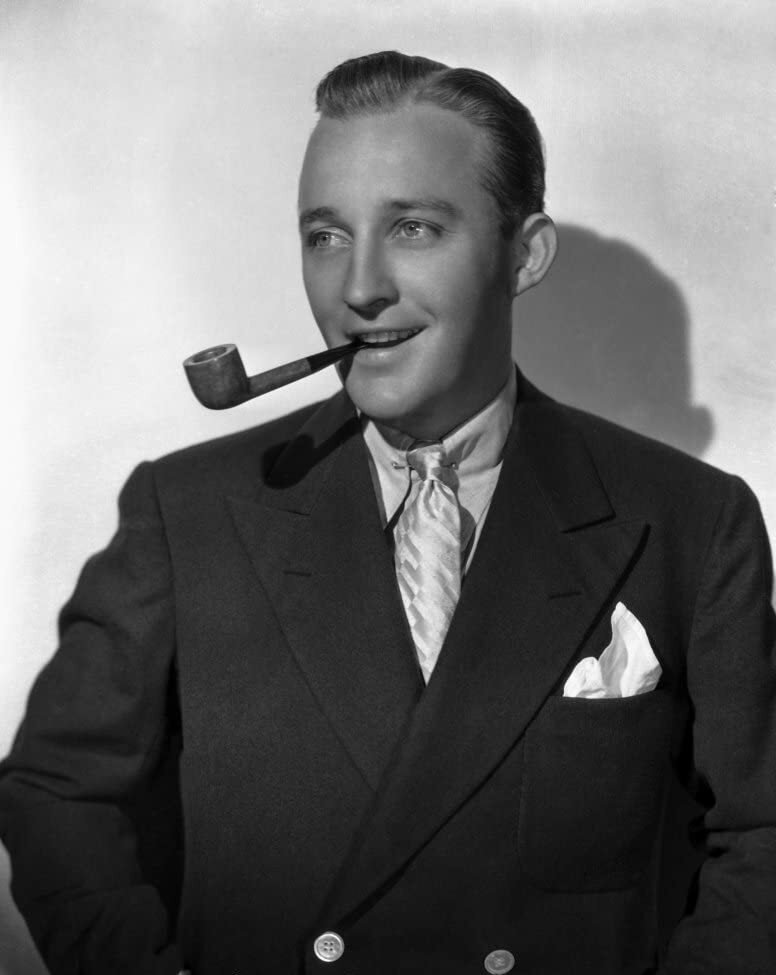
From Tacoma to the Rhythm Boys
Bing Crosby was born Harry Lillis Crosby Jr. on May 3, 1903, in Tacoma, Washington, in a house his father built, the fourth of seven children of a bookkeeper father and a mother who sang around the house, and the family moved to Spokane three years later, where he was raised, and where he went to Gonzaga University, and where he picked up the nickname Bing from a comic strip called The Bingville Bugle, a name that stuck for the rest of his life, and that became, in the end, one of the most famous names in the world. Some older sources give his birth date as May 2, 1903, and the article follows the current record, which gives May 3, and notes the variant honestly rather than pretending the record is settled.
He came to music through his parents, through his father's Edison phonograph and his mother's singing, and he preferred whistling as a boy, whistling and humming wherever he went, a habit that stayed in his singing for the rest of his career, and in the 1920s he joined Paul Whiteman's band, and then the Rhythm Boys, and he learned the road, and the recording studio, and the microphone, and in 1928 he had his first number one hit with a jazz version of Ol Man River, and in 1930 the Rhythm Boys appeared in the film King of Jazz, and in 1931 Mack Sennett signed him to a solo film contract, and Crosby, who had married Dixie Lee in September 1930, became, in the end, a solo star, and the voice that would define popular singing for a generation.
White Christmas and the Crooning King
Crosby became the first great crooner, the relaxed, intimate singer who made the microphone sound like a conversation, and he recorded more than 1,600 songs in a career that ran from 1926 to 1977, and he made more than 70 feature films, and he led record sales, network radio ratings, and motion picture grosses for five decades, and no other singer of his time matched him in all three at once, and his radio show, the Kraft Music Hall, made him a weekly guest in millions of American homes, and his voice became, in the end, the sound of the American century, as familiar as any voice that ever came out of a speaker.
His most famous recording was White Christmas, written by Irving Berlin for the film Holiday Inn in 1942, and it became the best-selling single of all time, with an estimated 100 million copies sold around the world, and it returned to the charts every Christmas for the rest of his life, and it still returns every Christmas now, and Crosby recorded it with the same easy warmth he brought to everything, and the song, in the end, outlived him, and outlived the film, and became a piece of the holiday itself, and the singer who made it became, in the end, inseparable from Christmas, and from the idea of home, and from the sound of a voice that never seemed to hurry, and never seemed to strain.
Going My Way and the Oscar
In 1944 Crosby starred in Going My Way as Father Chuck O'Malley, a young priest sent to save a run-down parish, and the film was a huge success, and Crosby won the Academy Award for Best Actor for it, the only competitive Oscar of his career, and he was nominated again the next year for the sequel, The Bells of St. Mary's, in 1945, and the two films made him, in the end, not just a singer who acted but a serious film star, and a man the Academy took seriously, and he received a Grammy Award for lifetime achievement in 1962, and his house in Spokane, built by his father in 1913, stands today on the campus of Gonzaga University as a museum holding more than 200 artifacts from his life and career, including his Oscar.
He was nominated for three Academy Awards in all, and he was chosen as Best Actor once, and the American Film Institute left him off its list of the 100 most successful film stars, a snub that his admirers have never forgiven, and Newsweek left him off its list of the 100 greatest voices of the century in 1998, and both omissions say more about fashion than about Crosby, because the record is plain, and the record is that he was the biggest star in the world for twenty years, and that he did it in records, and in radio, and in film, all at once, and that no one else did it the way he did, and that the movies, and the radio, and the record business were all, in the end, changed by him.
The Road Films with Bob Hope
Crosby's most famous screen partnership was with Bob Hope, and the two of them made seven Road films together, from Road to Singapore in 1940 to Road to Hong Kong in 1962, with Dorothy Lamour as their usual leading lady, and the films were loose, funny, musical travelogues, built on the friendship of the two men, and on their ability to ad-lib, and to undercut each other, and audiences loved them, and the series ran for more than twenty years, and it made both men richer and more famous, and it gave Crosby, in the end, a second act as a comedian, and a partner who matched him joke for joke, and the two of them stayed friends for the rest of their lives, and Hope outlived Crosby by twenty-six years, and died at 100 in 2003.
The Road films were only part of a film career that ran to more than 70 features, and Crosby worked with almost every major director of his time, and he played priests, and singers, and fishermen, and drunks, and he did it all with the same relaxed ease, and he was, in the end, the most bankable kind of star, the one audiences trusted, and the one studios could build a picture around, and the partnership with Hope was, in the end, the most durable comedy team in Hollywood history, and the two men, who had met on the vaudeville and radio circuits, became, in the end, a part of each other's legend, and neither man's story can be told without the other.
Two Marriages and Seven Children
Crosby was married twice. His first wife was the actress and singer Dixie Lee, whom he married in September 1930, and with whom he had four sons, Gary, Dennis, Phillip, and Lindsay, and the marriage lasted until Dixie Lee died of ovarian cancer in 1952, and the years after her death were hard ones for the family, and two of his sons, Gary and Dennis, later wrote bitter books about their father, and the family story became, in the end, a sad one, because Lindsay Crosby died in 1989 at 51, and Dennis Crosby died in 1991 at 56, both by suicide, and Gary Crosby died of lung cancer in 1995 at 62, and Phillip Crosby died of a heart attack in 2004 at 69.
His second wife was the actress Kathryn Grant, whom he married in 1957, and with whom he had three children, Harry, Mary, and Nathaniel, and the marriage lasted until his death in 1977, and Kathryn was with him through the last years, and through the British concert tour of 1977, and through the recording of the Christmas special with David Bowie, and she survived him, and raised the younger children, and the family, in the end, was a large one, and a complicated one, and a famous one, and the sons from the first marriage and the children from the second lived very different lives, and the Crosby name, in the end, belonged to all of them, and to the public, and to the songs, and to the films, and to the voice that had filled the world for fifty years.
The Final Year: Bowie, Brighton, and Madrid
The last year of Crosby's life was a busy one. In March 1977 he fell from a stage during a concert and hurt his back, and he spent the summer recovering, and in September he began a concert tour of Britain with his family and the singer Rosemary Clooney, including two weeks at the London Palladium, and on September 11, 1977, he taped a Christmas special in London, Merrie Olde Christmas, on which he recorded a duet of The Little Drummer Boy and Peace on Earth with the rock musician David Bowie, a pairing that seemed strange at the time and became, in the end, a classic, and the duet was released as a single in 1982 and reached number 3 in the British charts, and it remains a staple of holiday radio, and the final popular hit of his career.
His last concert was on October 10, 1977, at the Brighton Centre, with the entertainer Gracie Fields in the audience, and the next day he sang eight songs at the BBC's Maida Vale Studios for a radio program, and his last recorded performance was the song Once in a While, and on October 13 he flew alone to Spain to play golf and hunt partridge, and the next day he played 18 holes at the La Moraleja Golf Course in Alcobendas, near Madrid, with the World Cup champion Manuel Pinero as his partner, and he won the match by one stroke, playing off a 13 handicap, and as he walked back to the clubhouse at around 6:30 in the evening he said, That was a great game of golf, fellas. Let's go have a Coca-Cola, and about 20 yards from the clubhouse entrance he collapsed and died instantly of a heart attack, at 74, and a doctor at the clubhouse tried to revive him, and failed, and he was pronounced dead at the Reina Victoria Hospital, and he was buried at Holy Cross Cemetery in Culver City, California.
What Happened to Bing Crosby, in the End
So what happened to Bing Crosby? He was born Harry Lillis Crosby Jr. in Tacoma in 1903, he was raised in Spokane, he joined Paul Whiteman and the Rhythm Boys in the 1920s, he went solo in 1931, he married Dixie Lee in 1930, he recorded White Christmas in 1942, he won the Oscar for Going My Way in 1944, he made seven Road films with Bob Hope from 1940 to 1962, he lost Dixie Lee in 1952, he married Kathryn Grant in 1957, he received a Grammy lifetime achievement award in 1962, he recorded a duet with David Bowie on September 11, 1977, he gave his last concert in Brighton on October 10, 1977, and he died on October 14, 1977, at 74, of a heart attack, on a golf course near Madrid, a few yards from the clubhouse, after winning his last game of golf.
He was buried at Holy Cross Cemetery in Culver City, California, and he is, still, the voice of White Christmas, and the star of Going My Way, and the partner of Bob Hope on the Road, and the singer of more than 1,600 songs, and the actor in more than 70 feature films, and the man who led record sales, radio ratings, and motion picture grosses from 1926 to 1977, and who was, in the end, one of the first global cultural icons, and one of the most popular and influential musical artists of the twentieth century, and who died, in the end, on a golf course, in the evening, in Spain, at 74, with his last words a cheerful invitation to his friends, and with a game of golf, won by one stroke, behind him.
Frequently asked questions
What happened to Bing Crosby?
Bing Crosby died on October 14, 1977, at 74, of a heart attack, at the La Moraleja Golf Course near Madrid, Spain. He collapsed about 20 yards from the clubhouse after finishing 18 holes of golf, and was pronounced dead at the Reina Victoria Hospital. He was buried at Holy Cross Cemetery in Culver City, California.
When and where was Bing Crosby born?
May 3, 1903, in Tacoma, Washington, as Harry Lillis Crosby Jr. He was raised in Spokane. Some older sources give his birth date as May 2, 1903; this article follows the current record, which gives May 3.
What was Bing Crosby's most famous song?
White Christmas, recorded for the film Holiday Inn in 1942. It became the best-selling single of all time, with an estimated 100 million copies sold around the world, and it returns to the charts every Christmas.
Did Bing Crosby win an Oscar?
Yes. He won the Academy Award for Best Actor for Going My Way (1944), playing Father Chuck O'Malley. He was nominated again the next year for The Bells of St. Mary's (1945), and received a Grammy Award for lifetime achievement in 1962.
How many Road movies did Bing Crosby make with Bob Hope?
Seven, from Road to Singapore (1940) to Road to Hong Kong (1962), usually with Dorothy Lamour as their leading lady. The series ran for more than 20 years and was built on the two men's friendship and ad-libbed comedy.
Who was Bing Crosby married to?
Twice. Dixie Lee, from 1930 until her death from ovarian cancer in 1952, with whom he had four sons, Gary, Dennis, Phillip and Lindsay; and Kathryn Grant, from 1957 until his death in 1977, with whom he had three children, Harry, Mary and Nathaniel.
What were Bing Crosby's last words?
According to his golfing partner Valentin Barrios, Crosby said, 'That was a great game of golf, fellas. Let's go have a Coca-Cola,' as he walked back to the clubhouse at around 6:30 in the evening. He collapsed about 20 yards from the entrance.
What happened to Bing Crosby's sons?
All four sons from his first marriage died before old age. Lindsay died in 1989 at 51 and Dennis in 1991 at 56, both by suicide; Gary died of lung cancer in 1995 at 62; Phillip died of a heart attack in 2004 at 69.
Sources
- EN WikipediaBirth, Spokane, Rhythm Boys, White Christmas, Going My Way, Road films, marriages, Bowie duet, death
- BritannicaBirth May 3 1903, death October 14 1977, heart attack on a golf course, age 74, Oscar for Going My Way
- Irish AmericaDeath on a golf course near Madrid, legacy, Grammy lifetime achievement 1962