What Happened to Amy Coney Barrett?
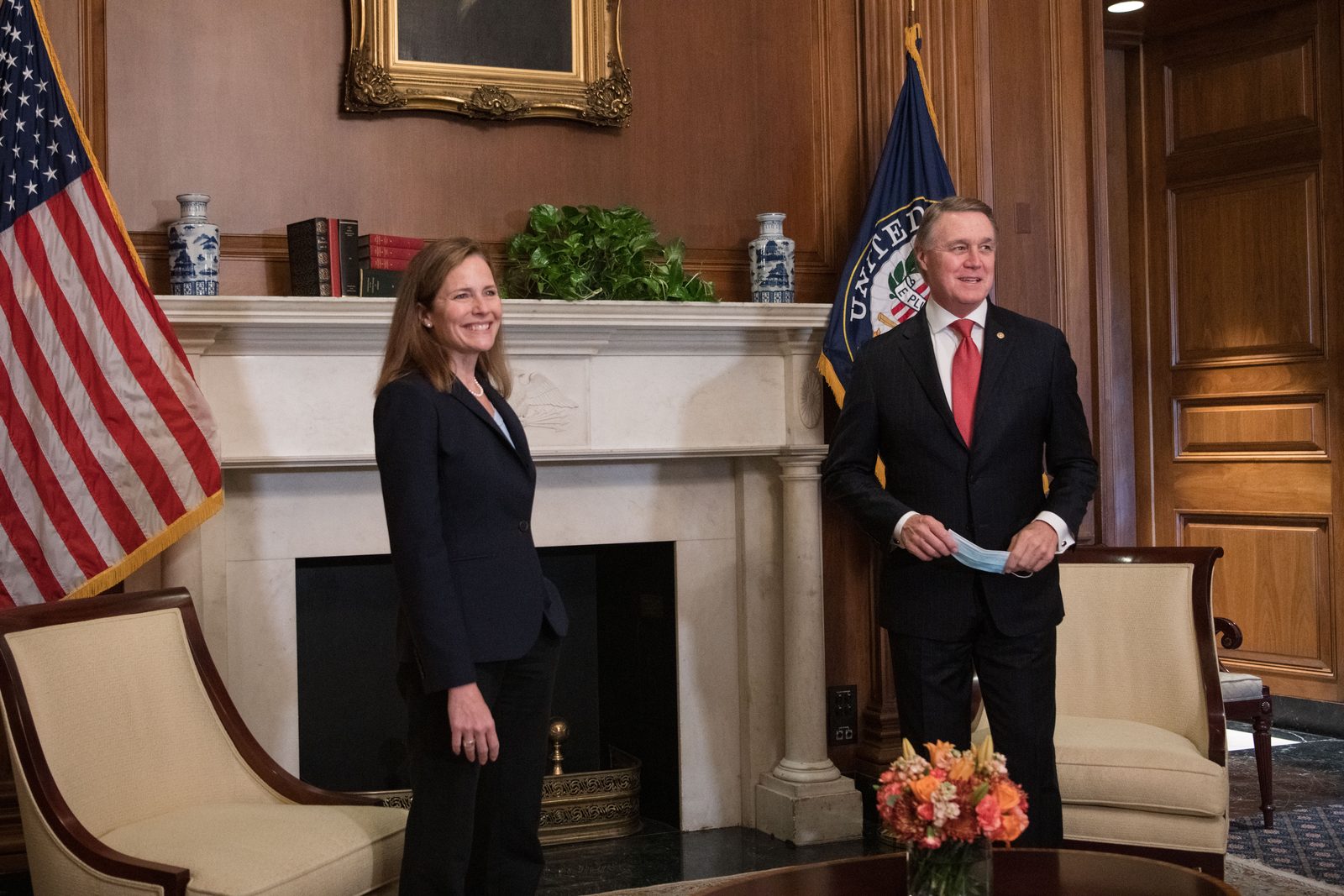
The Rise to the Court
Amy Vivian Coney Barrett, born January 28, 1972, in New Orleans, Louisiana, was a Notre Dame law professor and former Antonin Scalia clerk when President Donald Trump nominated her to the Seventh Circuit Court of Appeals in 2017. Her academic writing on originalism and precedent made her a conservative legal star.
When Justice Ruth Bader Ginsburg died in September 2020, Trump nominated Barrett to the Supreme Court, and the Senate confirmed her on October 26, 2020, just days before the presidential election. At 48, she became the fifth woman to serve on the Court and its youngest member, cementing a 6-3 conservative supermajority.
Her Scalia clerkship, the most prestigious apprenticeship in conservative law, shaped her entire approach: textualism, originalism, and the distinctive writing style, clear, confident, occasionally wry, that marks her opinions. She has called Scalia the model for her judicial life.
A Family of Nine
Barrett's large family was central to her public image during confirmation. She and her husband Jesse Barrett, a former federal prosecutor whom she married in 1999, have seven children: Emma, Vivian, Tess, John Peter, Liam, Juliet and Benjamin, ranging from teenagers to young adults, including two adopted from Haiti and a youngest son with Down syndrome.
Her Catholic faith, her membership in the charismatic Christian group People of Praise, and her balancing of a high-powered career with seven children were scrutinized intensely during her hearings, with supporters presenting her as a role model and critics questioning her judicial philosophy.
Husband Jesse Barrett, a former federal prosecutor turned private practitioner, has kept a low profile, and the family's seven children, including two adopted from Haiti, are largely shielded from public view. The Barretts' South Bend roots remain central to their identity despite Washington life.
The Haiti adoptions, two of her seven children adopted from the country, reflect the family's deep Catholic faith and commitment to service. The children's privacy is fiercely guarded, with the family rarely photographed together since the confirmation.
Major Opinions
On the Court, Barrett has been a pivotal conservative vote with an independent streak. She joined the majority in Dobbs v. Jackson (2022), overturning Roe v. Wade, and in major decisions on guns (Bruen), affirmative action (Students for Fair Admissions) and administrative power. But she has also broken with the Court's right flank at times, joining liberal justices on procedural and emergency-docket matters and writing concurrences that stake out narrower positions.
Legal analysts describe her as an originalist in the Scalia mold but with a distinctive voice: careful, academic, and occasionally unpredictable. Her questions at oral argument are famously precise, and her opinions are closely read for signals of where the Court's center of gravity lies.
Her emergency-docket votes have occasionally broken with conservatives, joining liberals to deny certain stays, a pattern analysts read as institutional caution rather than ideological drift. These moments make her the Court's most-watched swing dynamic within its conservative supermajority.
Her religious liberty opinions, consistently siding with claimants, reflect both her Catholic faith and her textualist reading of the First Amendment. These decisions, among her most predictable, anchor her conservative reputation.
Author and Public Figure
Barrett published a memoir, Listening to the Law, reflecting on her judicial philosophy and life, which became a bestseller and sparked the usual confirmation-era debates in book form. She teaches and lectures, including at Notre Dame, and her public appearances draw both admirers and protesters.
As one of the Court's younger justices, her influence is expected to span decades, making her one of the most consequential appointments of the modern era.
Listening to the Law, her bestselling memoir, argues for a judicial philosophy of restraint and textual fidelity, written in accessible prose aimed at general readers. Critics across the spectrum engaged with its arguments, making it one of the rare judicial memoirs to shape public debate.
Where Is She Now?
At 54, Justice Barrett is in the prime of a Supreme Court tenure that could last 30 more years. Each term brings blockbuster cases on which her vote is decisive, and her evolving jurisprudence, originalist but independent, makes her the justice court-watchers study most closely.
What happened to Amy Coney Barrett is a transformation from law professor to one of the most powerful people in America, in under five years, with a lifetime appointment still in its early chapters.
Each term's blockbuster cases, on abortion, guns, religion and administrative power, run through her chambers, and her vote is often decisive. At 54, with a lifetime appointment, she will shape American law into the 2050s, making her 2020 confirmation one of the most consequential political events of the century.
Her 2026 term, with major cases on administrative power and social media regulation, keeps her at the center of American law. At 54, her influence will only grow as seniority accumulates.
The 2020 Confirmation Battle
Barrett's 2020 confirmation was among the most contentious in history. Nominated eight days after Ruth Bader Ginsburg's death, she faced a Senate rushing to confirm before the election, with Democrats decrying the hypocrisy after Republicans blocked Merrick Garland in 2016. The hearings were a spectacle: Barrett's blank notepad, held up to show she answered without notes, became iconic, and her calm, precise testimony frustrated Democratic attempts to pin her down.
Confirmed 52-47 on October 26, 2020, she took her seat days before a presidential election, the closest-to-an-election confirmation in modern history. The speed and circumstances of her appointment shadowed her early tenure, with critics questioning its legitimacy and supporters celebrating a generational conservative victory.
Originalism: Her Judicial Philosophy
Barrett is an originalist in the tradition of her mentor Antonin Scalia, for whom she clerked: the Constitution's meaning is fixed at enactment, and judges should not update it. Her academic writing, including influential articles on stare decisis (respect for precedent), argued that precedent deserves deference but not absolute obedience, a framework she applied in joining Dobbs.
Her opinions are known for careful, academic reasoning and a willingness to write separately: her concurrences often stake out narrower grounds than the majority, signaling an independent mind. Court-watchers parse her separate writings for clues about the Court's future direction, making her the justice whose evolution matters most.
The Notre Dame Years
Before the bench, Barrett was a beloved Notre Dame Law School professor, three times voted Distinguished Professor of the Year by students. Her scholarship on constitutional interpretation, federal courts and precedent made her a rising star in conservative legal academia, and her Catholic faith and large family were well known in South Bend.
Her 2017 Seventh Circuit confirmation hearings previewed the Supreme Court battle: Democrats questioned her about faith's role in judging (Dianne Feinstein's the dogma lives loudly within you line became a conservative rallying cry), and she was confirmed 55-43. The appellate tenure was brief, just three years, before the Supreme Court call came.
Timeline
1972: Born in New Orleans. 1990s: Rhodes College, Notre Dame Law; Scalia clerkship. 2002-2017: Notre Dame professor. 2017: Seventh Circuit. September 2020: Nominated to Supreme Court. October 26, 2020: Confirmed 52-47. 2022: Joins Dobbs majority. 2024: Publishes Listening to the Law. 2026: At 54, a pivotal justice with decades ahead.
The Barrett Children in Public
The Barretts' seven children became public figures during the 2020 confirmation, seated behind their mother in the hearing room as senators debated her fitness. The image, a mother of seven facing the Judiciary Committee, was powerful political theater, deployed by supporters as proof of her capability and criticized by opponents as irrelevant to judicial qualification.
Since then, the family has retreated from view: the children, including two adopted from Haiti and a son with Down syndrome, are shielded from press, and Barrett rarely discusses them publicly. The balance between a public life of immense consequence and a private family life of deliberate normalcy defines her Washington existence.
The Emergency Docket
Barrett's emergency docket votes, the shadow docket decisions on stays and injunctions, have occasionally surprised: joining liberals to deny certain conservative stay requests, she has shown an institutional caution that complicates simple ideological narratives. Court analysts parse these votes obsessively for signals about her true jurisprudential home.
The pattern suggests a justice protecting the Court's legitimacy even at the cost of conservative outcomes, a stance that has drawn both praise and criticism. Whether strategic or principled, her shadow-docket independence makes her the term's most unpredictable conservative vote.
Frequently asked questions
What happened to Amy Coney Barrett?
She was confirmed to the Supreme Court on October 26, 2020, becoming the fifth woman justice, and has since become a pivotal conservative vote.
How old is Amy Coney Barrett?
54. She was born January 28, 1972, in New Orleans, Louisiana.
How many kids does Amy Coney Barrett have?
Seven children with husband Jesse Barrett, including two adopted from Haiti.
Who appointed Amy Coney Barrett?
President Donald Trump nominated her in September 2020 after Justice Ginsburg's death; the Senate confirmed her days before the election.
What cases has Barrett decided?
She joined majorities in Dobbs (overturning Roe), Bruen (guns), and the affirmative action cases, with occasional independent concurrences.
Did Amy Coney Barrett write a book?
Yes, Listening to the Law, a bestselling memoir on her judicial philosophy.
Is Amy Coney Barrett still on the Supreme Court?
Yes. With a lifetime appointment at 54, she is expected to serve for decades.
Sources
- Amy Coney Barrett - WikipediaWikipedia
- Supreme Court of the United StatesSupreme Court
- Notre Dame Law SchoolNotre Dame