What Happened to Alan Ladd, Shane's Star?
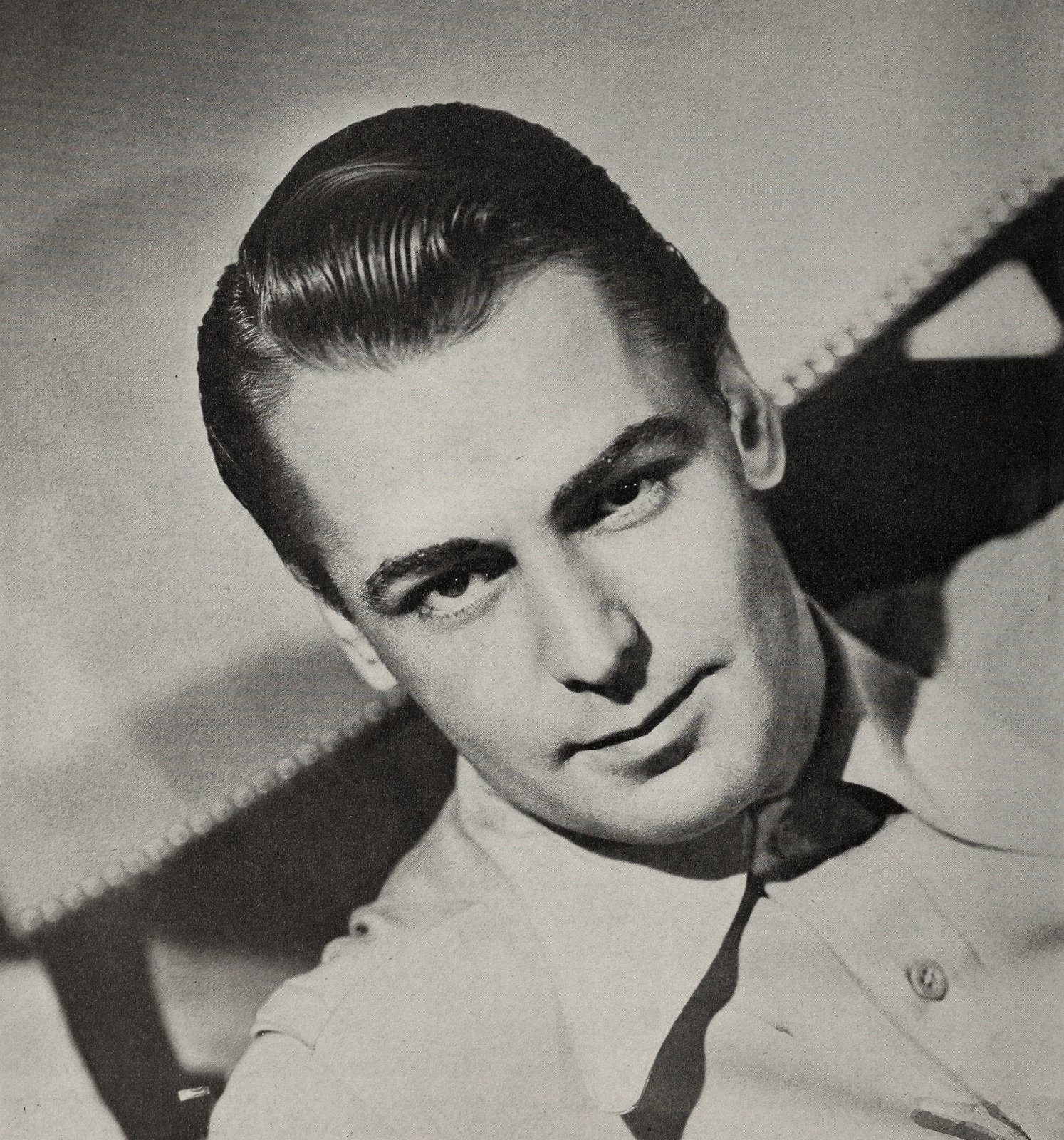
A Burned House and a Mother's Suicide
Alan Walbridge Ladd was born on September 3, 1913, in Hot Springs, Arkansas, the only child of Ina Raleigh Ladd, who was English, from County Durham, and had migrated to the United States in 1907 when she was 19, and of Alan Ladd Sr., a freelance accountant. His father died of a heart attack when Ladd was four, and on July 3, 1918, young Alan accidentally burned down the family home while playing with matches, and his mother moved the family to Oklahoma City, where she married Jim Beavers, a house painter, and in the early 1920s an economic downturn led the family to move to California, a journey that took four months, and they lived, at first, in a migrant camp in Pasadena, and then moved to the San Fernando Valley, where Beavers went to work at FBO Studios as a painter, and Ladd enrolled in North Hollywood High School on February 18, 1930, where he became a high-school swimming and diving champion, and where he played Ko-Ko in The Mikado, in his senior year, and where his diving skills led to an appearance in the aquatic show Marinella, in July 1933.
In 1937 tragedy struck the family again. Ladd's mother, after asking to borrow money from him, bought poison, an arsenic-based ant paste, and drank it in the back seat of his car, effectively committing suicide in front of her son, who became increasingly reliant on alcohol to cope with the trauma, and the event has been cited, ever since, as the wound that never healed in Ladd's life, and that explained, in part, the depression and the drinking that would, in the end, kill him. He had, by then, already been signed, in August 1933, as one of a group of young discoveries by Universal Pictures, but the studio decided he was too blond and too short, and dropped him after six months, and all of his fellow discoveries were eventually dropped too, including a young Tyrone Power, and Ladd went to work in the advertising department of a newspaper, and sold cash registers, and borrowed 150 dollars to open his own hamburger and malt shop, across from his old high school, which he called Tiny's Patio, after his high-school nickname, Tiny, and he was unable to make a success of it, and he went to work at Warner Bros. as a grip, and stayed two years, until he was injured falling off a scaffold, and decided to quit.
Radio, Sue Carol, and the Long Climb
Ladd managed to save and borrow enough money to attend an acting school run by Ben Bard, who had taught him when he was under contract at Universal, and Bard later claimed that Ladd was such a shy guy he just would not speak up loud and strong, and that he had to get him to lower his voice, because it was too high, and to get himself a decent set of dentures, and Ladd appeared in several stage productions for Bard, and in 1936 he played an unbilled role in Pigskin Parade, and he had short-term stints at MGM and RKO, and he got regular professional acting work only when he turned to radio. Ladd had worked to develop a rich, deep voice ideal for that medium, and in 1936 he was signed by station KFWB as its sole radio actor, and he stayed for three years, working as many as 20 shows per week, and one night, while he was playing the roles of a father and son on radio, he was heard by the agent Sue Carol, who was impressed, and called the station to talk to the actors, and was told they were only one person, and she arranged to meet him, and, impressed by his looks, she signed him to her books, and enthusiastically promoted her new client in films and on radio, and on March 15, 1942, Ladd married her, in Mexico City, and she would be his wife, and his manager, and the center of his life, until his death 22 years later.
His first notable part under Carol's management was the 1939 film Rulers of the Sea, in which he played a character named Colin Farrell, at 250 dollars per week, and he received attention for a small part in Hitler, Beast of Berlin, in 1939, and he tested unsuccessfully for the lead in Golden Boy, in 1939, but obtained many other small roles, including the serial The Green Hornet, in 1940, and Her First Romance, in 1940, and The Black Cat, in 1941, and the Disney film The Reluctant Dragon, in 1941, and, most notably, a small, uncredited part in Citizen Kane, playing a newspaper reporter toward the end of the film. His career gained extra momentum when he was cast in a featured role in Joan of Paris, in 1942, a wartime drama made at RKO, in which his touching death scene brought him attention within the industry, and RKO offered him a contract at 400 dollars per week, but he soon received a better offer from Paramount, and everything changed.
This Gun for Hire and Overnight Stardom
Paramount had owned the film rights to A Gun for Sale, a novel by Graham Greene, since 1936, but waited until 1941 before making a movie out of it, changing the title to This Gun for Hire, and the director, Frank Tuttle, was struggling to find a new actor to play Raven, a hit man with a conscience, and Ladd auditioned successfully, and Paramount signed him to a long-term contract in September 1941 for 300 dollars per week, and the New York Times wrote that Tuttle and the studio were showing more than a passing enthusiasm for Ladd, who had been trying to get a foothold in pictures for eight years, but had received no encouragement, although he had tried every angle known to town, and that Sue Carol had undertaken to advance the youth two years earlier, and only recently could she locate an attentive ear, and then the breaks began. According to the author David Thomson, once Ladd had acquired an unsmiling hardness, he was transformed from an extra to a phenomenon, and his calm, slender ferocity made it clear that he was the first American actor to show the killer as a cold angel, and John Houseman later wrote that Ladd played a professional killer with a poignant and desolate ferocity that made him unique, for a time, among the male heroes of his day.
Both the film and Ladd's performance played an important role in the development of the gangster genre, and the New York Times obituary, on January 30, 1964, said that the old-fashioned motion picture gangster with his ugly face, gaudy cars and flashy clothes was replaced by a smoother, better-looking and better-dressed bad man largely through the work of Ladd. Though the romantic lead went to the established star Robert Preston, Ladd's teaming with the female lead Veronica Lake captured the public's imagination, and their overnight-sensation pairing continued in three more films, The Glass Key, in 1942, The Blue Dahlia, in 1946, and Saigon, in 1948, and Ladd was voted by the Motion Picture Herald as one of the 10 stars of tomorrow for 1942, and his salary was raised to 750 dollars per week, and he was, in the space of a single film, a star.
Shane and the Peak of the 1950s
Ladd then appeared in Lucky Jordan, in 1943, and in China, in 1943, with Loretta Young, and he was inducted into the Army on January 18, 1943, after reprising his performance in This Gun for Hire on radio for Lux Radio Theatre, and he briefly served in the United States Army Air Forces' First Motion Picture Unit. He had initially been classified 4-F, unfit for military service because of stomach problems, but he later enlisted, on January 19, 1943, and he was posted to the Walla Walla Army Air Base, attaining the rank of corporal, and he fell ill, and went to the military hospital in Santa Barbara for several weeks in October, and on October 28 he was given an honorable medical discharge because of a stomach disorder complicated by influenza, and while he was in the services, a number of films that had been announced for him were postponed or made with different actors, and Paramount started promoting Ladd replacements, and old Ladd films were reissued with his being given more prominent billing, and he was reportedly receiving 20,000 fan letters per week, and the New York Times reported that Ladd, in the brief period of a year and with only four starring pictures to his credit, had built up a following unmatched in film history since Rudolph Valentino skyrocketed to fame.
When he returned from the Army, Ladd starred in And Now Tomorrow, in 1944, and in Two Years Before the Mast, in 1946, and in The Great Gatsby, in 1949, and in Whispering Smith, in 1948, his first western and color film, and in Shane, in 1953, which was to prove his last major box-office success, and in which he played the gunfighter in buckskin who rides in from nowhere, helps a homesteader family, and rides away again, and the film was noted for its contributions to the western genre, and it has become, in time, the role that defines him, the quiet man in buckskin, who says little, and does what has to be done, and leaves, and Ladd played him with the same cool, unsmiling, understated persona that had made him famous in This Gun for Hire, and the audience, which had loved him for a decade, loved him even more for it.
Decline, the Gunshot, and Two Marriages
His popularity diminished in the mid-1950s, though he continued to appear in numerous films, and in the remaining decade of his life good roles were scarce, and his problems with depression and alcohol increased, and he became increasingly despondent, and in November 1962 he was found on his Hidden Valley Lake ranch with a serious gunshot wound to his chest, which he barely survived. After initial reports that the wound was caused by a gun-cleaning accident, Ladd claimed that he had heard what he thought was a midnight prowler, and removed the pistol he kept in a bedside table, and told reporters that the gun must have gone off when he tripped over his sleeping dog. The incident was widely suspected to have been a suicide attempt, and the studio covered it up as an accident, and this article states both versions plainly, because the record is, on this point, genuinely unclear, and because Ladd deserves an honest account, and because the official version was an accident, and the version almost everyone believed was a suicide attempt, and both versions are part of his story.
Ladd was married twice. His first marriage, to his high-school sweetheart Marjorie Jane Harrold, lasted from 1936 to 1941 and ended in divorce, and his second, to Sue Carol, lasted from 1942 until his death in 1964, a partnership of 22 years that was, by every account, the center of his life, because Sue Carol was not only his wife but his agent and his manager, and the woman who had made him a star, and he had three children: Alana Ladd, who became an actress, David Ladd, who had a career as a child actor in the 1950s and 1960s, and Alan Ladd Jr., known as Laddie, who enjoyed a long and illustrious career as a top studio executive, and who would, in time, become the president of 20th Century Fox, and the co-founder of the Ladd Company, and the producer of films that his father could never have imagined, and the family, in the end, carried his name further than he ever did himself.
The Carpetbaggers and the Last Night
After enduring press reports that he had undergone plastic surgery prior to his appearance in the 1964 Paramount film The Carpetbaggers, based on the popular novel by Harold Robbins, Ladd retreated to his vacation home in Palm Springs, California, and on January 29, 1964, he was found dead there, in his sleep, from a combination of sleeping pills and alcohol, at 50. His younger son, David Ladd, had a career as a child actor, and his older son, Alan Ladd Jr., was still dubbed Laddie in the Hollywood press, and enjoyed a long career as a studio executive, and the official cause of death was cerebral edema brought on by an acute overdose of alcohol, a barbiturate, chloral hydrate, and two tranquilizers, Librium and Valium, and the death was ruled accidental, although it was suspected, by many, to have been a suicide, and the official autopsy reports ruled out suicide, and the arguments continue to this day as to whether Ladd died by accident or by his own hand, and this article reports the official ruling, and notes the suspicion, and does not resolve what cannot be resolved.
His final film, The Carpetbaggers, in which he played Nevada Smith in his first supporting role since This Gun for Hire, was released posthumously in April 1964, and it was among the highest-grossing pictures of 1964, and it was, in the end, a strange coda to a career that had been, mostly, about a quiet man who said little and did what had to be done, and who died, in the end, as he had lived, quietly, and alone, in his sleep, in Palm Springs, and he was buried at Forest Lawn Memorial Park in Glendale, California, and he was inducted into the Arkansas Entertainers Hall of Fame in 1996, and his son Alan Ladd Jr. went on to become an Oscar-winning producer and studio boss, and the name Ladd, which had once meant a beautiful hunk of a man in buckskin, came to mean, in the end, a family, and a company, and a legacy that outlived the man himself.
What Happened to Alan Ladd, in the End
So what happened to Alan Ladd? He was born in Hot Springs, Arkansas, in 1913, he lost his father at four, he burned down the family home at five, he watched his mother take her own life in the back seat of his car, he was dropped by Universal as too blond and too short, he worked in radio for three years, he was discovered by Sue Carol, he married her, he became a star overnight in This Gun for Hire, he was paired with Veronica Lake, he served in the Army Air Forces, he played Shane, he played Nevada Smith, he was married twice, he had three children, he was found with a bullet in his chest in 1962, he retreated to Palm Springs, and he died on January 29, 1964, at 50, of cerebral edema caused by an accidental overdose of alcohol, a barbiturate and two tranquilizers, and his last film, The Carpetbaggers, was released after he was gone, and he was buried at Forest Lawn in Glendale.
What remains is Shane, still riding in from nowhere, still in buckskin, still saying little, still doing what has to be done, and Raven, still cool, still unsmiling, still the first American actor to show the killer as a cold angel, and the example of a man who started in Hot Springs, in 1913, as Alan Walbridge Ladd, and ended in Palm Springs, in 1964, as Alan Ladd, having done exactly what he set out to do: act, for more than thirty years, in film noir, and in westerns, and on the radio, without ever stopping, and without ever needing to be the loudest man in the room, and who died, in the end, as he had lived, quietly, and far too soon, and who left behind three children, and a son who became a studio boss, and a name that still means, to anyone who loves the movies, Shane.
Frequently asked questions
What happened to Alan Ladd?
Alan Ladd died on January 29, 1964, at 50, at his home in Palm Springs, California, of cerebral edema caused by an accidental overdose of alcohol, a barbiturate and two tranquilizers. The death was officially ruled accidental, though it was widely suspected to have been a suicide.
What was Alan Ladd most famous for?
Shane (1953), in which he played the gunfighter in buckskin, and This Gun for Hire (1942), in which he played Raven, the hit man with a conscience, opposite Veronica Lake. Both roles defined his cool, unsmiling screen persona.
Did Alan Ladd try to kill himself in 1962?
In November 1962 he was found with a gunshot wound to his chest. The official version was an accident: he said he tripped over his sleeping dog while holding a pistol. It was widely suspected to have been a suicide attempt, and the studio covered it up as an accident. The record is genuinely unclear.
How tall was Alan Ladd?
5 feet 6 inches (168 cm). Universal dropped him after six months in 1933 partly because he was considered too short and too blond. Studios later used camera tricks and staging to make him appear taller on screen.
Who was Alan Ladd married to?
Twice: first to his high-school sweetheart Marjorie Jane Harrold, from 1936 to 1941, ending in divorce; then to his agent Sue Carol, from March 15, 1942, until his death in 1964.
How many children did Alan Ladd have?
Three: Alana Ladd, who became an actress; David Ladd, a child actor in the 1950s and 1960s; and Alan Ladd Jr., known as Laddie, who became a top studio executive, president of 20th Century Fox and co-founder of the Ladd Company.
Did Alan Ladd serve in the military?
Yes, briefly. He enlisted in the Army Air Forces in January 1943 and served in the First Motion Picture Unit, but was given an honorable medical discharge in October 1943 because of a stomach disorder complicated by influenza.
What was Alan Ladd last film?
The Carpetbaggers (1964), in which he played Nevada Smith in his first supporting role since This Gun for Hire. It was released posthumously in April 1964 and was among the highest-grossing pictures of the year.
Sources
- EN WikipediaBirth, radio career, This Gun for Hire, Shane, Army service, gunshot, death
- BritannicaBirth, death, depression and alcoholism, Shane, The Carpetbaggers
- Encyclopedia of ArkansasBirth, family, gunshot wound, death, burial, Hall of Fame