The Short Answer: 50 Years Old
Sia is 50 years old. Born December 18, 1975, in Adelaide, South Australia, she turned 50 in December 2025. Her age is central to her story: unlike most pop stars, Sia's solo fame arrived in her late thirties - after she had already spent a decade as one of the music industry's most in-demand (and anonymous) songwriters.
Before "Chandelier" made her a star at 38, Sia had written hits for Rihanna ("Diamonds"), Beyonce ("Pretty Hurts"), Katy Perry, Britney Spears, and dozens more. She has described her pivot to performing as reluctant - she only agreed to promote 1000 Forms of Fear (2014) if she didn't have to show her face, birthing the oversized blonde wigs that became her trademark.
At 50, Sia occupies a unique position in pop: a hitmaker who became famous by refusing fame's terms, a 50-year-old woman thriving in a youth-obsessed industry, and an artist whose voice - that unmistakable, cracking belt - is among the most recognizable of the century.
Born in 1975: Adelaide Roots
Sia Kate Isobelle Furler was born on December 18, 1975, in Adelaide, Australia, into a musical family - her father was a musician, her mother an arts administrator, and her uncle is actor Kevin Colson. She has described a difficult adolescence marked by trauma, and she left home young, eventually moving to London in the late 1990s.
Her early career was journeyman work: she sang with the Adelaide acid jazz band Crisp in the mid-1990s, releasing the album OnlySee (1997) in Australia before the band dissolved. In London, she became a featured vocalist for the downtempo duo Zero 7, her voice gracing their acclaimed albums Simple Things (2001) and When It Falls (2004). Solo albums Healing Is Difficult (2001) and Colour the Small One (2004) earned critical respect and a cult following but little commercial success.
By her early thirties, Sia was considering quitting performing entirely. Instead, she moved to New York and reinvented herself as a songwriter-for-hire - a decision that would make her rich, anonymous, and eventually, reluctantly, famous.
The Ghostwriter Years: Hits for Everyone Else
In her thirties, Sia became pop's secret weapon. Her songwriting credits from this era read like a playlist of the 2010s: Rihanna's "Diamonds" (2012), Beyonce's "Pretty Hurts" (2013), Katy Perry's "Double Rainbow," Britney Spears' "Perfume," Celine Dion's "Loved Me Back to Life," and dozens more. She wrote quickly, emotionally, and prolifically - often in single sessions.
"Chandelier" itself was originally written for Rihanna or Beyonce; when they passed, Sia kept it. Released in March 2014, when she was 38, it became a global smash - top 10 in the US, No. 1 in multiple countries - and earned four Grammy nominations. Its video, featuring 11-year-old Maddie Ziegler in a nude leotard performing frenetic choreography in an empty apartment, became one of the most-watched music videos of all time and launched Ziegler's career.
The follow-ups - "Elastic Heart," "Big Girls Cry," and then This Is Acting (2016), an album literally composed of songs rejected by other artists, which gave her first US No. 1 album and the hit "Cheap Thrills" - cemented her unlikely stardom. She was pushing 40 and had become one of the biggest pop stars on Earth without ever showing her face.
The Wig: Fame on Her Own Terms
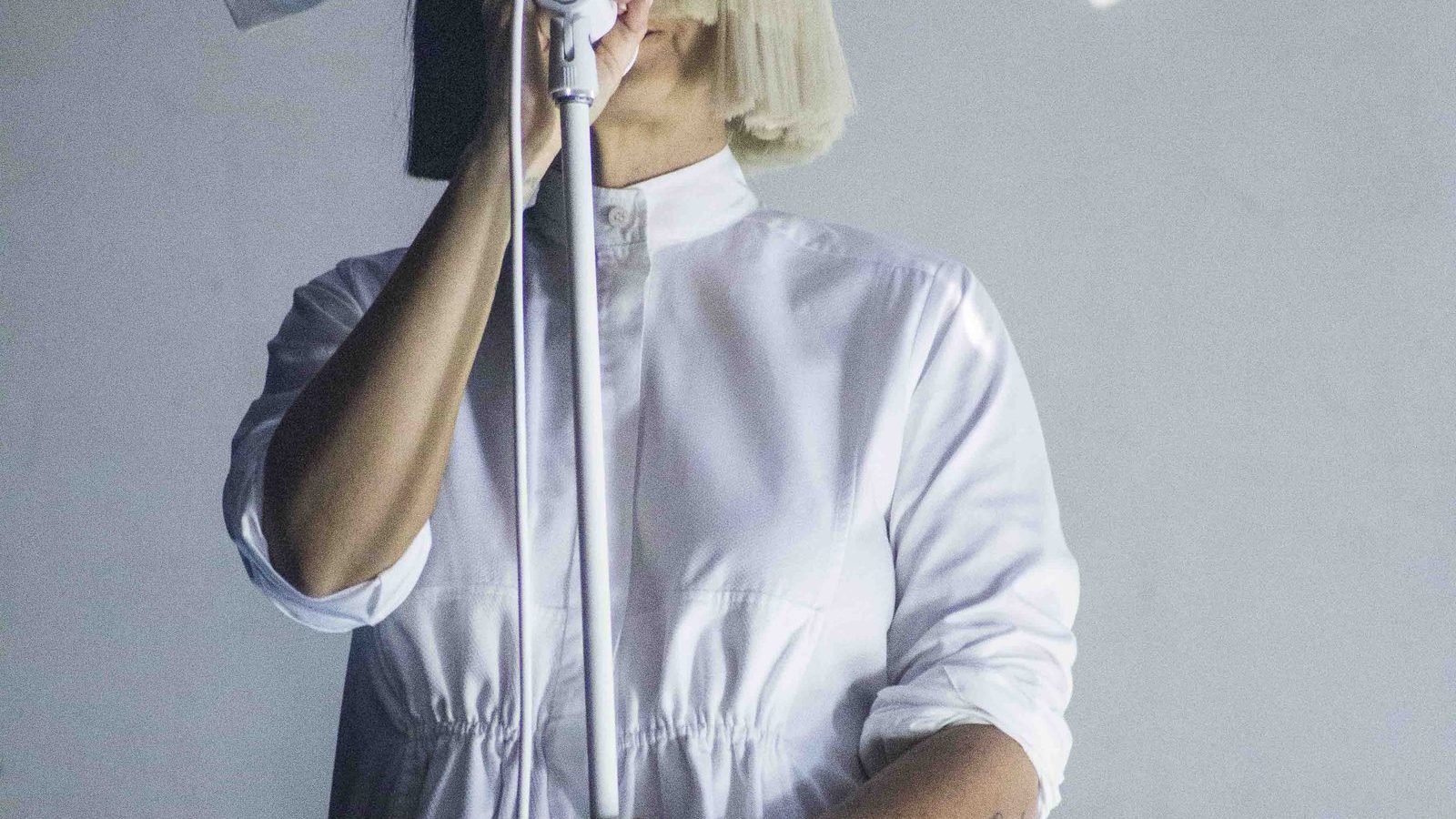
Sia's face-covering wigs - giant blonde bobs that hide her features - began as a deal with her label and became a cultural statement. Having watched fame damage friends and collaborators, the 38-year-old new star was determined not to be consumed by it. "I don't want to be famous," she told interviewers. The wig let her walk through airports unrecognized while her songs played everywhere.
The strategy worked almost too well: the anonymity became its own kind of fame. She performed on talk shows with her back to the camera, sent proxies (including Ziegler, comedian Tig Notaro, and actor Kristen Wiig) to accept awards and appear in videos, and turned every public appearance into performance art about celebrity itself.
In recent years, at 48-50, Sia has shown her face more often - in interviews, on social media, and in her directorial debut, the film Music (2021). The wig remains her signature, but the woman underneath has become increasingly visible: a 50-year-old artist who beat the industry at its own game.
Personal Life: Fiercely Private at 50
Sia guards her personal life more carefully than almost any star of her stature. She married documentary filmmaker Erik Anders Lang in 2014; the couple divorced in 2016. She has been open about her struggles with addiction, bipolar disorder, and chronic pain (including Ehlers-Danlos syndrome), speaking about them as a mental health advocate.
In 2019, at 43, Sia revealed she had adopted two teenage sons - then 18-year-olds aging out of the foster care system. She has kept their identities and lives almost entirely private, mentioning them only occasionally: that they were struggling, that she loved them, that motherhood at 43 was humbling. In 2023, she married radiation oncologist Dan Bernad in a surprise ceremony at Dolce & Gabbana's Italian estate; the marriage ended in divorce in 2025.
She is also known for her animal rights activism and philanthropy, and for her close creative partnership with Ziegler, whom she has described as a muse and chosen family. At 50, Sia's inner circle remains tiny by celebrity standards - a deliberate choice from a woman who learned early what fame costs.
Sia at 50: Still Writing, Still Singing
At 50, Sia shows no signs of slowing. She released Reasonable Woman in 2024 - her first solo album in eight years - featuring the hit "Gimme Love," and continues to write for other artists. Her voice remains one of pop's great instruments: that raw, yodeling belt that sounds like it's constantly on the verge of breaking, and never does.
Her influence on the industry is profound. She proved that a woman could become a pop star at 38, on her own aesthetic terms, without playing fame's game - and paved the way for a generation of artists more interested in art than celebrity. The songwriters she mentored, the artists she wrote for, the dancers she championed: her fingerprints are on two decades of pop.
Fifty years after her December 1975 birth in Adelaide, Sia Furler has had three distinct careers - cult singer, ghostwriter, reluctant superstar - and succeeded at all of them. The wig may come off more often now, but the mystery remains intact. That was always the point.
Awards and Recognition at 50
Sia's trophy case reflects her unusual path: celebrated first as a songwriter, then as a star. She has won ARIA Music Awards, an MTV Video Music Award, and been nominated for nine Grammy Awards, including Record of the Year and Song of the Year for Chandelier. The song also earned her APRA Song of the Year honors in Australia.
As a songwriter, her reach is staggering. She has written for virtually every major pop star of the 2010s, and her compositions have sold hundreds of millions of copies. Diamonds (Rihanna), Pretty Hurts (Beyonce), Titanium (David Guetta): the list is a tour of the decade's biggest hits, most written in single sessions from raw emotion.
At 50, she has also been honored for advocacy: animal rights work, LGBTQ allyship, and openness about mental health and chronic illness. The wig started as a privacy shield; it ended as an icon. Few artists have been so famous for refusing fame, and been so decorated anyway.
The Early Years: Zero 7 and the Long Struggle
Before the wig, there was the grind. Sia started in the Adelaide acid jazz band Crisp in the mid-1990s, then moved to London, where she became the voice of British downtempo duo Zero 7, singing on their acclaimed albums Simple Things (2001) and When It Falls (2004). Her voice, smoky, soulful, unmistakable, was already fully formed.
The solo albums came slowly: Healing Is Difficult (2001), Colour the Small One (2004), Some People Have Real Problems (2008), We Are Born (2010). Critically adored, commercially modest. She was a singer's singer, famous among musicians, unknown to the public. She nearly quit: by 2010, she was ready to retire from performing entirely and just write songs.
Then the songwriting took off (Rihanna, Beyonce, Guetta), then Chandelier (2014) made her a star at 38, on her own reluctant terms. The 15-year overnight success is the real story: Sia did not arrive; she endured. At 50, the struggle years read as the necessary apprenticeship for everything after.
Quick Facts
Born December 18, 1975 - 50 in 2026. Famous for "Chandelier" (2014, age 38) and the face-hiding wigs. Former ghostwriter for Rihanna, Beyonce, Katy Perry. Two adopted sons. Full FAQ below.
Frequently Asked Questions
How old is Sia?
Sia is 50 years old. She was born on December 18, 1975, in Adelaide, Australia.
When is Sia's birthday?
December 18, 1975. She turned 50 in December 2025.
What is Sia's real name?
Sia Kate Isobelle Furler.
Why does Sia wear a wig?
To protect her privacy - she became famous reluctantly at 38 and used face-covering wigs to avoid being recognized while keeping her music career.
Does Sia have kids?
Yes. She adopted two teenage sons in 2019 and keeps their lives private.
Is Sia married?
She married Erik Anders Lang in 2014 (divorced 2016) and Dan Bernad in 2023 (divorced 2025).
What songs did Sia write for other artists?
Rihanna's Diamonds, Beyonce's Pretty Hurts, Katy Perry and Britney Spears tracks, and many more - she was one of pop's top songwriters in the 2010s.
How old was Sia when Chandelier came out?
38. Chandelier was released in March 2014, making her a solo star unusually late for pop.
Sources
- Sia - WikipediaBorn December 18, 1975, Adelaide; Crisp, Zero 7; songwriting career; Chandelier 2014.
- Sia discography - Wikipedia1000 Forms of Fear (2014), This Is Acting (2016), Reasonable Woman (2024).
- Maddie Ziegler - WikipediaChandelier video dancer; Sia creative partnership.
- Screendollars: Sia