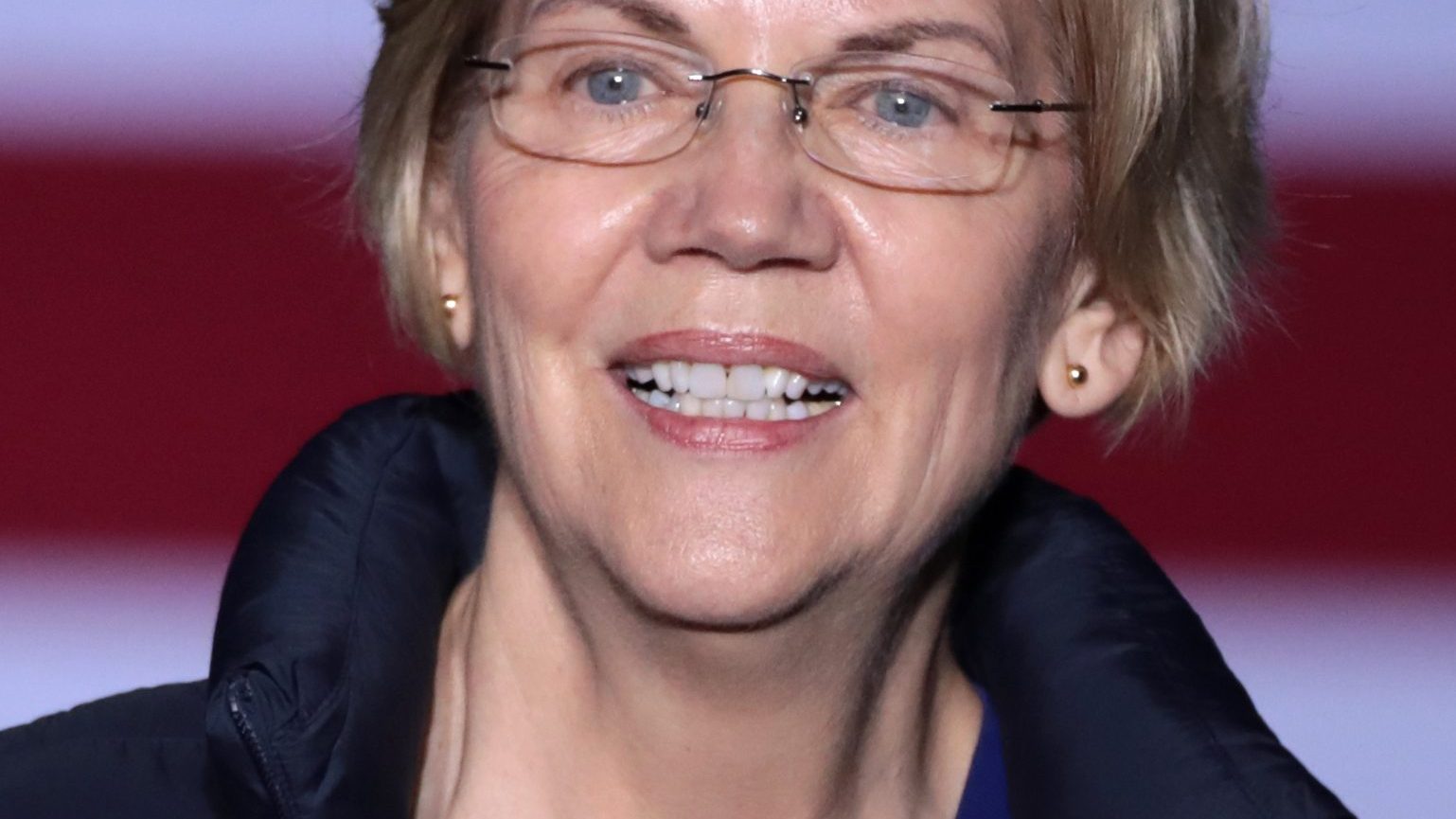
The Short Answer: 77 Years Old
Elizabeth Warren is 77 years old. She was born Elizabeth Ann Herring on June 22, 1949, in Oklahoma City, Oklahoma, the fourth child and only daughter of Donald and Pauline Herring. She turned 77 in June 2026, midway through her third term in the U.S. Senate.
Warren's age is part of her political identity: she is a member of the generation that came of age in the 1960s, built a career as a pioneering woman in legal academia, and entered electoral politics at 63 - an age when most politicians are winding down. Her 2020 presidential campaign, at 70, made her one of the oldest serious contenders for a major-party nomination, and she finished third in the Democratic primaries behind Joe Biden and Bernie Sanders.
At 77, she remains one of the Senate's most active legislators - a specialist in banking regulation, consumer protection, and economic policy whose ideas (from the Consumer Financial Protection Bureau to wealth-tax proposals) have shaped the Democratic Party's agenda for over a decade.
Born in 1949: Oklahoma Roots
Warren's Oklahoma childhood is the foundation of her political story - and she tells it constantly. Her father was a maintenance man and salesman; her mother worked in the catalog order department at Sears. When her father suffered a heart attack when Warren was 12, her mother went to work at 50 to keep the family afloat - a story Warren invokes as the origin of her focus on working families.
She was a star student and debater at Northwest Classen High School in Oklahoma City, winning a debate scholarship to George Washington University at 16. She left after two years to marry her high school sweetheart, Jim Warren, at 19, and finished her undergraduate degree at the University of Houston, graduating in 1970.
After teaching special education briefly, Warren attended Rutgers Law School, earning her J.D. in 1976 at 27 - while raising two small children. She has described studying with a baby on her hip and an aunt's help with childcare, an experience that informs her advocacy for working mothers to this day.
The Professor: Harvard Law and Bankruptcy Expertise
Warren's academic career was extraordinary by any measure. After teaching at several law schools, she joined the University of Pennsylvania Law School and then, in 1995 at 46, Harvard Law School - becoming one of the nation's leading experts on bankruptcy and commercial law. Her research argued, against the conventional wisdom, that most personal bankruptcies were caused by medical emergencies, job losses, and family breakups - not irresponsibility.
Her 2003 book The Two-Income Trap, co-written with her daughter Amelia, argued that middle-class families were going broke not from overspending but from fixed costs - housing, healthcare, childcare. The book made her a public intellectual beyond legal circles and laid the intellectual groundwork for her political career.
In 2008, at 59, Senate Majority Leader Harry Reid appointed her to chair the Congressional Oversight Panel for the TARP bank bailout. Her sharp questioning of Treasury officials made her a YouTube star of the financial crisis - and a hero to progressives who felt the banks had been let off easy. It was the beginning of her transformation from professor to politician.
The CFPB: Her Signature Achievement
Warren's biggest concrete achievement came before she ever held office. After the 2008 crisis, she proposed and championed the creation of the Consumer Financial Protection Bureau (CFPB) - a federal agency dedicated to policing banks, lenders, and financial products on behalf of consumers. The idea became law in the 2010 Dodd-Frank Act.
President Obama asked her to set up the bureau in 2010, but Republican opposition blocked her nomination as its first director - so she ran for the Senate instead. In 2012, at 63, she defeated incumbent Republican Scott Brown in Massachusetts, one of the cycle's marquee races, and took office in January 2013.
The CFPB has since returned tens of billions of dollars to consumers through enforcement actions - a tangible legacy that Warren cites as proof that ideas can become institutions. At 77, she remains the bureau's fiercest defender against repeated Republican efforts to defund or dismantle it.
Family: Two Marriages, Two Children
Warren has been married twice. Her first marriage, to Jim Warren - a NASA engineer she met in high school - lasted from 1968 to 1978. They had two children: Amelia Warren Tyagi (born 1971), a businesswoman and co-author of The Two-Income Trap, and Alexander Warren (born 1976), a computer scientist.
In 1980, at 31, she married Bruce H. Mann, a Harvard Law School professor specializing in legal history. They have been married for 46 years - a partnership that carried her through the leap from academia to the Senate to a presidential campaign. Mann, now in his seventies, has been a visible and supportive presence on the campaign trail.
Warren is also a grandmother - Amelia has three children - and a famous dog person: her golden retriever Bailey, a fixture of her 2020 campaign (complete with his own "Bailey for First Dog" merchandise), died in 2024. At 77, her family life is deliberately low-key for a national figure: the professor from Oklahoma who happens to be a senator.
The 2020 Run and Life at 77
Warren's 2020 presidential campaign was the peak of her national prominence. Launching on December 31, 2018, at 69, she ran as the "plans" candidate - releasing detailed policy proposals at a furious clip, from a wealth tax to universal childcare to student debt cancellation. She surged to frontrunner status in the fall of 2019, drawing massive crowds and small-dollar donations.
The campaign faltered in early 2020 - a damaging controversy over her past claims of Native American ancestry, which she addressed with a DNA test in 2018 that backfired politically, and a crowded field. She finished third in the primaries and endorsed Biden. At 70, it was likely her last shot at the presidency - though in politics, never say never.
At 77, Warren remains a Senate powerhouse: grilling bank CEOs in hearings that routinely go viral, pushing antitrust and crypto regulation, and serving as a bridge between the party's progressive and establishment wings. Whether she seeks a fourth Senate term or retires, her imprint on American economic policy - the CFPB, the wealth tax debate, the focus on corporate power - is permanent.
Senate Career: The Highlights
Warren took office in January 2013 at 63 and became the Senate's most feared questioner of bank CEOs. Her grillings of Wells Fargo's John Stumpf (2016) and other executives are YouTube classics watched by millions. She sits on the Banking, Housing, and Urban Affairs Committee and the Finance Committee, where she has pushed Wall Street regulation, antitrust enforcement, and cryptocurrency oversight.
Her legislative footprint includes the wealth tax proposal, a 2 percent annual tax on fortunes over 50 million dollars, which reshaped the Democratic economic debate even without passing; student debt cancellation advocacy, partially realized through executive actions; and the Accountable Capitalism Act, which would require large corporations to consider stakeholders beyond shareholders.
Re-elected in 2018 and 2024, she is now in her third term at 77: a progressive institution, a mentor to younger senators, and proof that entering politics at 63 is not too late. The professor became the senator; the senator became the movement's conscience. Her ideas, once dismissed as radical, are now mainstream Democratic policy.
The 2020 Campaign: Plans and Persistence
Warren's 2020 presidential campaign was the most policy-driven in modern history. She entered the race on December 31, 2018, at 69, with a famous promise: I have a plan for that. And she did, for everything: wealth tax, student debt, childcare, antitrust, housing. Dozens of detailed white papers, released one after another, made her the ideas candidate.
The campaign peaked in late 2019: she briefly led national polls, drew 20,000-person crowds, and seemed poised to win. Then came the electability squeeze (Biden's comeback, Sanders's base), the DNA test controversy fallout, and a disappointing Super Tuesday. She suspended the campaign on March 5, 2020, at 70, without endorsing, a classy exit from a bruising race.
The legacy: the plans outlived the campaign. Biden adopted much of her economic agenda; the wealth tax debate she started reshaped the party; and she proved a 70-year-old woman could run on substance and nearly win. At 77, she is the senator the campaign made her: sharper, tougher, and still planning.
Quick Facts
Born June 22, 1949 - 77 in 2026. Senator from Massachusetts since 2013. Married Bruce Mann since 1980; two children (Amelia, Alexander) from first marriage. Created the CFPB. Ran for president in 2020. Full FAQ below.
Frequently Asked Questions
How old is Elizabeth Warren?
Elizabeth Warren is 77 years old. She was born on June 22, 1949, in Oklahoma City, Oklahoma.
When is Elizabeth Warren's birthday?
June 22, 1949. She turned 77 in June 2026.
Is Elizabeth Warren married?
Yes. She has been married to Harvard Law professor Bruce Mann since 1980.
How many children does Elizabeth Warren have?
Two: daughter Amelia Warren Tyagi and son Alexander Warren, both from her first marriage to Jim Warren.
What is Elizabeth Warren known for?
Creating the Consumer Financial Protection Bureau (CFPB), her work on bankruptcy law at Harvard, and her progressive Senate career including a 2020 presidential run.
When did Elizabeth Warren become a senator?
She was elected in 2012 and took office in January 2013 as the senior U.S. senator from Massachusetts.
Did Elizabeth Warren run for president?
Yes, in 2020. She finished third in the Democratic primaries behind Joe Biden and Bernie Sanders.
Where was Elizabeth Warren born?
Oklahoma City, Oklahoma, on June 22, 1949.
Sources
- Elizabeth Warren - WikipediaBorn June 22, 1949; senator since 2013; Harvard Law; CFPB; 2020 presidential campaign.
- Consumer Financial Protection Bureau - WikipediaWarren's proposal; created by Dodd-Frank 2010.
- 2020 Democratic Party presidential primaries - WikipediaWarren finished third after Biden and Sanders.
- Moviefone: Elizabeth Warren