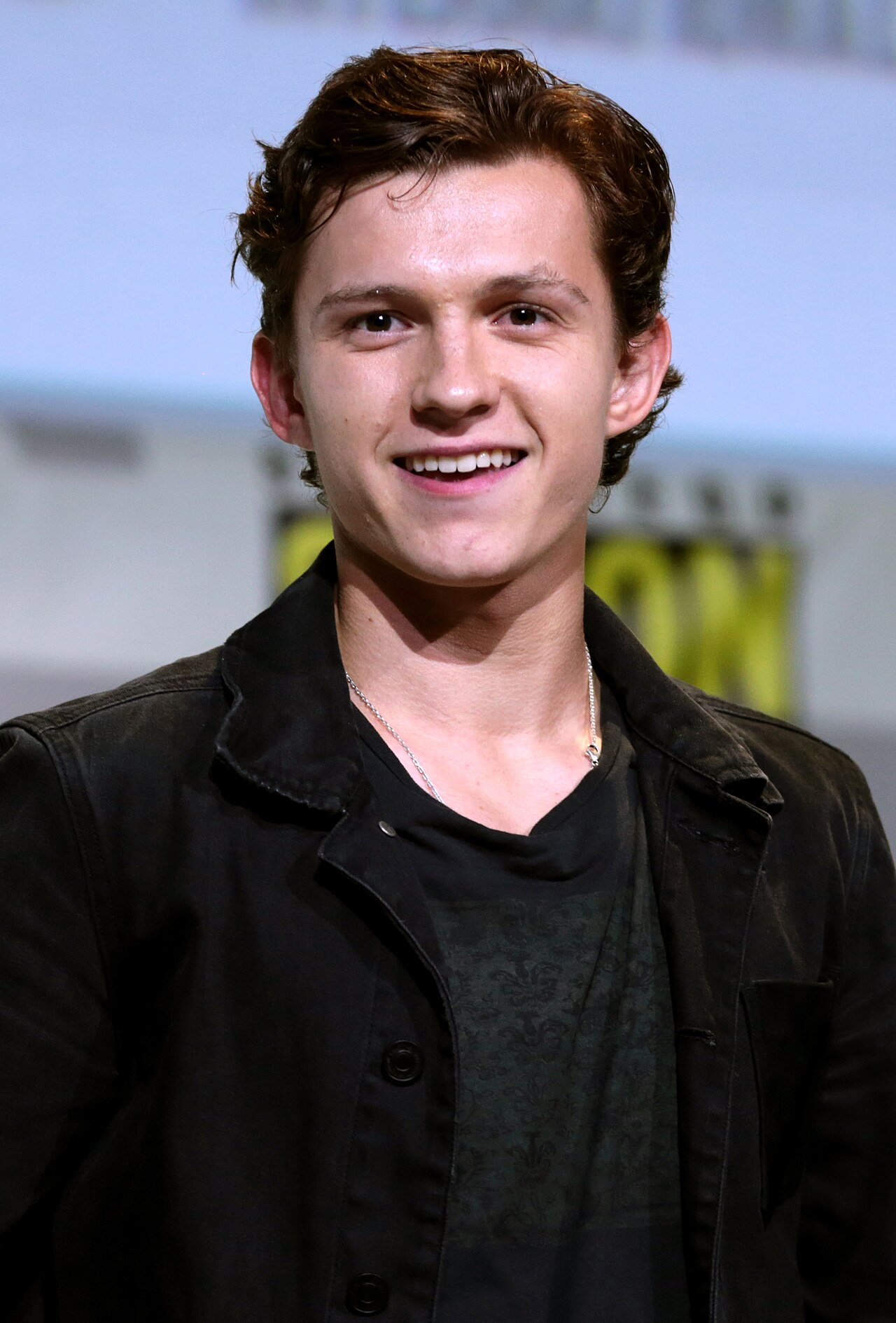
The $20–25 Million Base Salary
The headline number is $20–25 million, and it comes from TheWrap’s Umberto Gonzalez, one of the trades’ most plugged-in box-office reporters. In his reporting on the economics of Spider-Man: Brand New Day, Gonzalez put Holland’s upfront salary — the guaranteed base he earns regardless of how the film performs — in the $20–25 million range. MovieWeb’s breakdown of the report and ComicBook’s coverage repeated the same band, and none of the subsequent reporting has contradicted it.
To put the base in perspective: it is a classic A-list franchise quote, the kind of upfront number studios reserve for performers who can demonstrably open a film. Holland, whose films as a leading man have grossed well into the billions, has earned that status across four Spider-Man appearances and a string of non-superhero leads. The base alone — before bonuses, before profit participation, before any box-office escalator — would rank among the largest upfront salaries paid to any actor for a 2026 release.
The $75 Million Backend Escalator
The base is only the beginning. TheWrap’s reporting describes a backend structure with genuinely historic upside: a bonus worth roughly $75 million if Brand New Day crosses $2 billion at the worldwide box office, with an escalator that begins paying out at the $1 billion mark. In other words, Holland’s deal was engineered to make him a direct financial partner in the film’s success — the bigger the gross, the bigger the check, on a sliding scale that tops out near $75 million.
Backend deals of this shape are how modern franchise stars turn big hits into generational paydays. The structure mirrors the arrangements that made Robert Downey Jr. Hollywood’s highest-paid actor during the Avengers era, when profit participation multiplied his upfront salaries several times over. For Holland, the math is simple: a $20–25 million base plus a full $75 million backend would push his total compensation for Brand New Day toward $100 million — a number that would stand among the largest single-film paydays ever reported for a superhero movie.
Brand New Day in Context
Spider-Man: Brand New Day arrived in the summer of 2026 as the fourth film in Holland’s Spider-Man series, following Homecoming (2017), Far From Home (2019), and No Way Home (2021) — each of which grossed more than $1 billion worldwide. Directed by Destin Daniel Cretton, the film relaunched the character’s solo adventures after the multiverse-spanning No Way Home, and trade reporting described its commercial performance in superlatives, with coverage pointing to a worldwide gross north of $2 billion.
That context is what makes the backend structure more than theoretical. Holland’s Spider-Man films have been among the most reliable billion-dollar earners in the industry; No Way Home became the highest-grossing film of its year. A deal that pays $75 million at $2 billion was not wishful thinking by his representatives — it was a bet the studios were willing to take because the character’s track record made the threshold look achievable. When the film performed as the trades described, the bonus moved from aspiration to line item.
How Holland’s Pay Compares
Holland’s Brand New Day compensation represents a steep climb from where he started. When he was cast as a teenage Peter Parker for Captain America: Civil War (2016), he was a West End stage veteran with one acclaimed film role — The Impossible (2012) — and a salary to match an unknown. A decade later, he is the highest-grossing lead actor of his generation, with a BAFTA Rising Star award and a filmography whose lead-actor grosses rank among the biggest in history.
Within the Marvel ecosystem, the $20–25 million base puts him in the top tier of franchise compensation, in the company of the Avengers-era deals that reset the market — the kind of arrangements that paid Downey $75 million or more with backend on Infinity War and Endgame. The difference is leverage: Downey negotiated those deals as the irreplaceable center of the MCU; Holland negotiated his as the anchor of Sony’s most valuable property and a marquee name Marvel continues to build phases around. Few actors under 35 have ever commanded this kind of two-tiered deal — a top-of-market base with a nine-figure ceiling.
Why Sony and Marvel Paid Up
Studios do not hand out $75 million backend bonuses out of generosity; they do it because the alternative — losing the actor — costs more. Spider-Man is Sony’s crown jewel, and Holland’s version of the character has headlined three consecutive billion-dollar grossers. TheWrap’s reporting landed in a landscape where every Holland Spider-Man film had outperformed the last, and where the actor’s non-Spider-Man work — Uncharted (2022), Christopher Nolan’s The Odyssey (2026) — had only broadened his audience.
There is also the partnership math. Brand New Day is a Marvel Studios–Sony co-production, which means two studios splitting costs, revenues, and strategic interest in keeping the franchise’s star happy. A rich backend deal aligns everyone: Holland gets paid like a partner, the studios keep their upfront exposure at $20–25 million, and if the film does $2 billion business, nobody begrudges the bonus. It is the same logic that has governed franchise paydays for twenty years — pay the star last, pay him most, and make sure he wants to come back.
What Comes Next for Holland
A payday structured around box-office thresholds is also a retention tool. Holland remains the live-action Spider-Man of the Marvel Cinematic Universe, with Avengers: Doomsday (2026) and the broader Multiverse Saga keeping the character in active rotation. Each appearance extends a run that began when he was 19 — and each one resets his quote a little higher.
The Brand New Day deal may ultimately matter less for its dollars than for its signal. A $20–25 million base with a $75 million backend ceiling is the contract of an actor the industry considers irreplaceable — not a star renting a costume, but a partner in the franchise’s economics. Holland entered the MCU as a teenager discovered in a dance class; a decade later, he negotiates like the cornerstone. Whatever the final audited total of the Brand New Day backend turns out to be, the structure of the deal already tells the story: Tom Holland is no longer the kid who got lucky. He is the business.
The Sequel Math Behind the $2 Billion Target
The $2 billion threshold in Holland’s backend was not pulled from thin air — it was priced against the trajectory of his own franchise. Spider-Man: No Way Home (2021) grossed $1.92 billion worldwide, falling just short of the $2 billion mark while becoming the highest-grossing film of its year. A bonus that maxes out at $2 billion is, in effect, a bet that Brand New Day would outperform No Way Home — a reasonable wager given the character’s momentum and the clean-slate storytelling that followed the multiverse saga.
The $1 billion escalator, meanwhile, was essentially guaranteed money: every Holland Spider-Man solo film had cleared $1 billion, making that tier of the bonus a near-certainty rather than an incentive. This is how modern franchise deals are engineered — the lower threshold rewards the star for showing up, the upper threshold pays him like a partner only if the film becomes a historic hit. For the studios, the structure caps risk: had Brand New Day merely matched Far From Home’s $1.13 billion, Holland’s backend would have been a fraction of the $75 million maximum. The $2 billion number told the industry exactly how confident Sony and Marvel were.
Frequently Asked Questions
How much did Tom Holland get paid for Spider-Man: Brand New Day?
A base salary of $20–25 million, per TheWrap — plus a backend bonus worth roughly $75 million if the film passes $2 billion worldwide.
What is the backend bonus structure?
Per TheWrap, Holland’s deal includes a box-office escalator starting at $1 billion worldwide, topping out around $75 million at the $2 billion mark.
Could he really make $100 million for one film?
On paper, yes: the $20–25 million base plus a full $75 million backend would approach $100 million, which would rank among the biggest single-film paydays ever reported.
Who reported the salary?
TheWrap’s Umberto Gonzalez, in trade reporting on the film’s economics; MovieWeb, ComicBook, and Tyla repeated the figures with the same attribution.
Have Sony or Marvel confirmed the numbers?
No. As with almost all franchise salaries, the studios have not officially confirmed the base or the bonus structure — the figures are trade-reported.
How does this compare to his earlier Spider-Man films?
It is a steep climb from his teenage debut in Captain America: Civil War (2016). Each of his three prior solo Spider-Man films grossed over $1 billion, steadily raising his quote.
Who directed Brand New Day?
Destin Daniel Cretton. It is Holland’s fourth solo Spider-Man film, released in the summer of 2026.
Is Holland the highest-paid Spider-Man actor?
By reported compensation, his Brand New Day deal — base plus backend — sits at the very top of what any Spider-Man performer has been reported to earn for a single film.