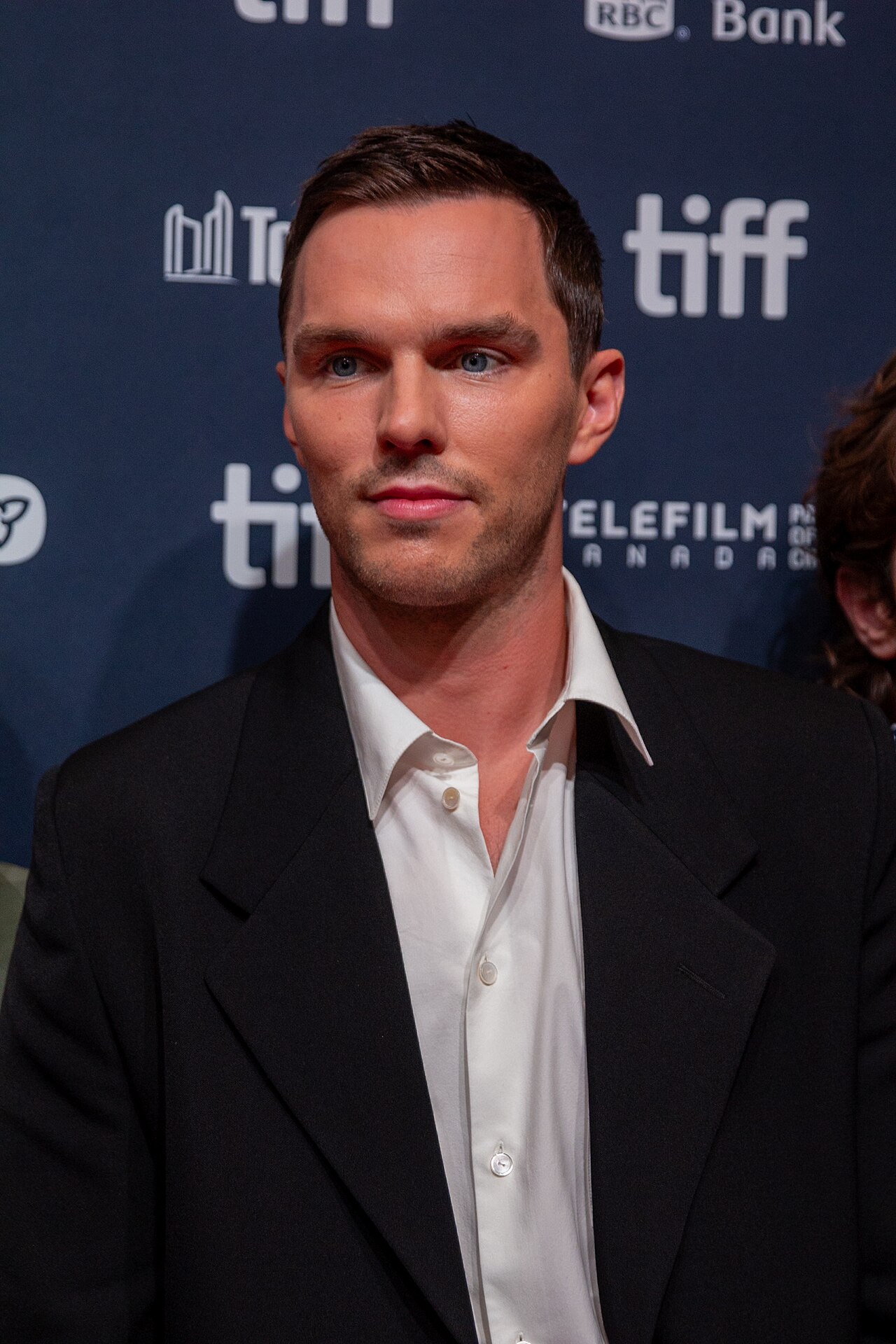
The $2 Million Figure
Nicholas Hoult’s Superman payday is $2 million, and the sourcing is about as good as Hollywood salary reporting gets. Matt Belloni of Puck News — the former Hollywood Reporter editor whose “What I’m Hearing” newsletter routinely breaks news on studio deal-making — reported the figure as part of his coverage of the film’s economics. CBR’s write-up of the revelation led with the surprise plainly: the highest earner on Superman was not David Corenswet, the actor playing the title role, but Hoult, the film’s villain.
ComingSoon’s report added the rest of the table: Corenswet and Rachel Brosnahan each took home $750,000, putting both leads at barely more than a third of Hoult’s compensation. FilmStories’ coverage of the film’s budget and salaries placed the numbers in the same configuration. The figures have been repeated consistently across the entertainment press without contradiction — and while DC Studios has not officially confirmed any cast salary, Belloni’s track record on this beat gives the $2 million real weight.
The Full Superman Salary Table
Belloni’s reporting effectively published the film’s top-line salary structure in three numbers. At the top: Hoult’s $2 million for Lex Luthor. In the middle tier: $750,000 apiece for Corenswet’s Clark Kent and Brosnahan’s Lois Lane. The gap is the story — a 2.7-to-1 ratio between the veteran antagonist and the newcomer hero. It is the kind of split that looks odd on a poster, where Corenswet’s face is the selling point, but makes complete sense on a spreadsheet.
Franchise reboots routinely pay this way. The studio’s biggest financial risk is the untested lead — an actor the audience has not yet accepted in an iconic role — so the lead’s quote stays modest until the film proves itself. The established name brought in to lend credibility, meanwhile, commands a veteran’s fee. Hoult arrived on Superman with a twenty-year résumé and recent awards-season heat; Corenswet arrived with promise. The $2 million versus $750,000 split is Hollywood pricing the difference between the two.
Why the Villain Out-Earned the Hero
Hoult’s $2 million did not come from nowhere — it came from two decades of accumulated leverage. He broke through as a child actor opposite Hugh Grant in About a Boy (2002), became a teen idol as Tony Stonem on Skins (2007–2008), and then built one of the most varied adult filmographies of his generation: Hank McCoy, the Beast, across four X-Men films starting with X-Men: First Class (2011); Nux in Mad Max: Fury Road (2015); the Emmy- and Golden Globe-nominated turn as Peter III in Hulu’s The Great (2020–2023); and a chilling Thomas Hutter in Robert Eggers’ Nosferatu (2024).
That résumé is what $2 million buys: a known quantity who can anchor scenes opposite an untested Superman, a performer with franchise experience (the X-Men films), prestige-TV credibility (The Great), and recent box-office relevance (Nosferatu). Corenswet, talented but unproven at this scale, had no comparable leverage — and his $750,000 reflects it. If Superman had flopped, the studio’s exposure on its lead would have been contained; Hoult’s fee was the insurance premium for having a proven actor hold the film’s center of gravity.
Hoult as Lex Luthor
The role itself justified the investment. Lex Luthor is the defining villain of the Superman mythos — the human genius whose hatred of the alien hero drives the franchise’s central conflict — and Gunn’s reboot positioned him as a co-lead in narrative weight if not in billing. Hoult shaved his head for the part and played Luthor as a tech-billionaire misanthrope, a take that drew on his facility for intelligent menace honed in roles like The Favourite (2018) and The Menu (2022).
Casting Hoult was also a statement of intent for the new DC Universe. Rather than stunt-casting the villain with the biggest available name, Gunn chose a character actor with leading-man range — someone whose $2 million fee bought credibility rather than tabloid heat. The choice paid off in reviews that frequently singled out the Luthor–Superman dynamic as the film’s strongest element, and it positioned Hoult as a foundational figure in whatever the DCU becomes.
The DCU’s Salary Discipline
Step back from the individual numbers and the Superman salary table reveals a studio exercising unusual discipline. A $2 million top salary on a superhero tentpole is modest by the standards of the genre’s previous era, when established stars routinely commanded $10 million-plus to join comic-book ensembles. Gunn and DC Studios co-head Peter Safran built the reboot’s economics around controlled costs — betting that a well-reviewed film could outperform a star-driven one, and that the savings on salaries could go toward the spectacle audiences actually pay for.
The strategy mirrors what Marvel did at its own launch: the original Iron Man (2008) paid its untested-in-the-role lead a fraction of what the franchise would later pay him, and the savings funded the universe. Whether the DCU can replicate that trajectory remains to be seen, but the salary structure shows the intent. Hoult’s $2 million was the ceiling, not the floor — and in an industry where franchise paydays only ever seem to inflate, a studio holding the line at $2 million for its highest-paid actor is itself a story.
What’s Next for Hoult
A $2 million payday for a franchise villain is rarely a one-off — it is a down payment on a multi-film arc. Luthor’s centrality to the Superman mythos all but guarantees Hoult’s return in whatever follows, and franchise contracts are typically structured with sequels in mind, meaning his next DCU appearance would likely come with a raise on the $2 million base. Villains who land tend to become the most renegotiated players in superhero ensembles.
Beyond the DCU, the Superman role caps a remarkable five-year run that has moved Hoult from respected ensemble player to genuine marquee name — The Great’s awards recognition, Nosferatu’s box-office success, and now the top salary on a Superman film. At 35, with a career stretching back to age six, he has reached the stage where his quote reflects not just what he has done but what studios believe he guarantees. The $2 million was the receipt.
What $2 Million Buys in the DCU
A $2 million franchise salary is never just a salary — it is the first installment of a multi-picture relationship. Standard superhero contracts include options for sequels and ensemble appearances, which means Hoult’s Lex Luthor deal almost certainly contains pre-negotiated terms for his return, typically with built-in raises for each subsequent film. If the DCU follows the Marvel playbook, the $2 million base is the floor, not the ceiling: each successful appearance reprices the actor upward, and villains who break out have historically become the most expensive renegotiations in their franchises.
There is also the backend question. The trades’ reporting focused on upfront salaries, but franchise players routinely negotiate box-office bonuses or profit participation that can multiply the base. Whether Hoult’s deal includes such escalators has not been reported — but at $2 million upfront, he entered the DCU with the leverage to ask. For DC Studios, the structure is the point: pay the credibility anchor fairly now, keep the total exposure contained, and let the franchise’s success determine what the second film costs.
Frequently Asked Questions
How much did Nicholas Hoult get paid for Superman?
A reported $2 million, per Puck News’ Matt Belloni — making him the highest-paid actor on the film.
Who reported the $2 million figure?
Matt Belloni of Puck News, in his industry newsletter; CBR, ComingSoon, FilmStories, and ScreenRant repeated the salary table with the same attribution.
Why did Hoult earn more than David Corenswet?
Leverage and experience: Hoult brought a 20-year résumé (X-Men, Mad Max: Fury Road, The Great, Nosferatu), while Corenswet was an untested franchise lead. Reboots routinely pay the veteran more than the newcomer.
How much did David Corenswet and Rachel Brosnahan earn?
$750,000 each, per the same Puck report — less than half of Hoult’s $2 million.
Who did Hoult play in Superman?
Lex Luthor, Superman’s arch-nemesis — written in Gunn’s reboot as a tech-billionaire antagonist with co-lead narrative weight.
Is $2 million a lot for a superhero villain?
By the genre’s old standards it is modest — but it reflects DC Studios’ cost discipline on the reboot, where Hoult’s fee was the cast ceiling rather than the floor.
Has DC Studios confirmed the salary?
No. Like almost all franchise paydays, the figure is trade-reported rather than officially confirmed.
Will Hoult return as Lex Luthor?
Nothing official has been announced, but Luthor’s centrality to the mythos and franchise contract norms make a return highly likely — typically with a raise on the $2 million base.