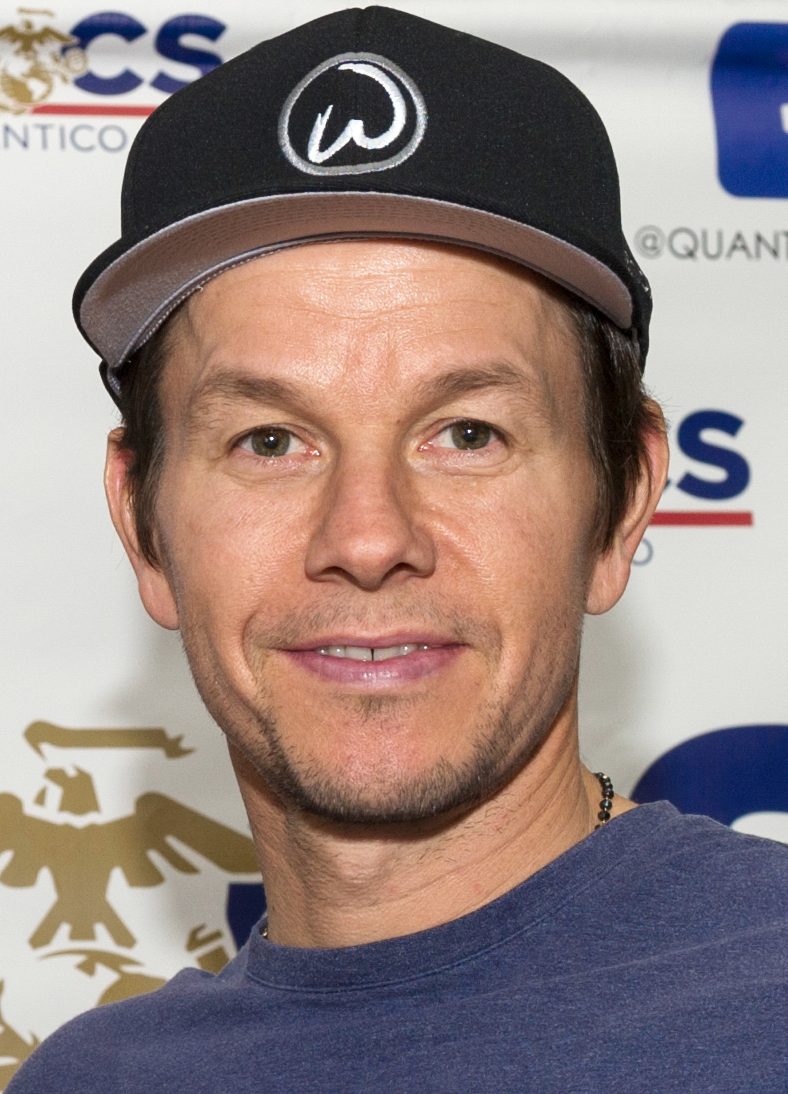
The $30 Million Figure
Mark Wahlberg made $30 million for Spenser Confidential, according to Variety’s August 2021 survey of Hollywood’s highest-paid stars. ScreenRant’s write-up of the report specified the crucial detail: the $30 million included Wahlberg’s streaming backend buyout — the lump sum Netflix pays in place of the box-office participation a star would traditionally earn from a theatrical hit. There were no ticket sales to share in; Spenser Confidential went straight to streaming in March 2020. So Netflix simply paid for the backend upfront, in cash, on top of the base salary.
On Variety’s list, the $30 million tied Wahlberg with Leonardo DiCaprio, who earned the same amount for Netflix’s Don’t Look Up. Above them sat only Daniel Craig ($100 million for two Knives Out sequels), Dwayne Johnson ($50 million for Red One), Will Smith ($40 million for King Richard), and Denzel Washington ($40 million for The Little Things). Below them, the entire $20 million club — Bullock, Pitt, Hemsworth, Gosling. For a star whose résumé was built on mid-budget studio films rather than billion-dollar franchises, $30 million was an emphatic statement of where the money had moved: to streaming.
Spenser Confidential: The Film
Spenser Confidential was the fifth collaboration between Wahlberg and director Peter Berg, following Lone Survivor, Deepwater Horizon, Patriots Day, and Mile 22 — a partnership built on a shared affection for blue-collar Boston stories. Based loosely on Robert B. Parker’s Spenser novels (and, to a lesser extent, the 1980s TV series Spenser: For Hire), the film cast Wahlberg as Spenser, an ex-Boston police officer fresh out of prison for assaulting a superior, who gets pulled into a murder conspiracy with the help of an aspiring MMA fighter played by Winston Duke. Alan Arkin, Iliza Shlesinger, Marc Maron, Post Malone, and Bokeem Woodbine filled out the ensemble.
Critics were unkind — the film holds a dismal Rotten Tomatoes score — but audiences showed up in force. According to data Netflix released, Spenser Confidential became one of the streamer’s most-watched films of all time, sitting alongside Bird Box, 6 Underground, and Extraction in the platform’s upper reaches. That disconnect — unloved by critics, devoured by viewers — is precisely the dynamic that made Wahlberg worth $30 million to Netflix. The streamer does not need reviews; it needs hours viewed. And Wahlberg, for all the critical shrugs, delivers hours.
From Marky Mark to $30 Million
Wahlberg’s path to a $30 million Netflix payday is one of Hollywood’s great second-act stories. He first became famous as Marky Mark, frontman of the hip-hop group Marky Mark and the Funky Bunch, whose debut single “Good Vibrations” hit number one on the Billboard Hot 100 in 1991. His screen debut came in Renaissance Man (1994), followed by a first starring role in Fear (1996) and the career-defining turn as porn star Dirk Diggler in Paul Thomas Anderson’s Boogie Nights (1997) — the performance that announced a real actor beneath the pop persona.
The 2000s built the foundation: The Perfect Storm (2000), Planet of the Apes (2001), The Italian Job (2003), and then the prestige breakthrough — an Academy Award nomination for Best Supporting Actor as the foul-mouthed Sergeant Dignam in Martin Scorsese’s The Departed (2006). The 2010s added box-office muscle (Ted, the Transformers films, Daddy’s Home) and a Golden Globe nomination for The Fighter. By the time Netflix came calling, Wahlberg had something few stars possess: a thirty-year record of opening movies across comedy, drama, and action, without ever depending on a single franchise. That versatility is what $30 million buys.
Why Netflix Paid Up
Netflix’s logic was straightforward. In the theatrical model, a star of Wahlberg’s stature earns a base salary plus a percentage of box-office gross — the backend that can double or triple the upfront number on a hit. On streaming, there is no box office, so the backend has to be bought out in advance, as a guaranteed lump sum. The $30 million for Spenser Confidential was, in effect, Wahlberg’s salary plus his hypothetical backend, fused into a single check. It looks enormous next to a theatrical salary; against the economics of a film that drew tens of millions of viewing households, it was simply the market price.
There was also the matter of what Netflix was buying beyond the film. Wahlberg was, in 2020, one of the most reliable draws in the business for the exact audience Netflix coveted — broad, mainstream, middle-American viewers who do not necessarily subscribe for auteur cinema. Paying $30 million for a proven commodity, rather than gambling the same amount on an unproven spectacle, was the conservative play dressed as extravagance. And the viewership numbers vindicated it: Spenser Confidential outperformed plenty of films that cost three times as much.
The Wahlberg–Berg Partnership
The $30 million also reflected the value of a proven creative partnership. Spenser Confidential was Wahlberg and Berg’s fifth film together, following a run that included the critically respected Lone Survivor and the commercially solid Deepwater Horizon and Patriots Day. Berg has said the two expect to be making movies together into old age, and Netflix was essentially buying into an existing machine: a director and star who know exactly what film they are making, for exactly which audience, at exactly what cost.
That efficiency matters in the streaming economy. A $30 million salary looks very different on a film with a controlled mid-range budget than on a $200 million tentpole — the star’s cut is large, but the total exposure is contained. Berg’s films with Wahlberg are known for coming in on time and on budget, a reputation that makes the upfront salary easier to justify. Netflix was not just paying for Wahlberg the actor; it was paying for the Wahlberg-Berg apparatus, a unit with a track record of delivering watchable, rewatchable mainstream entertainment without drama.
Where $30 Million Ranks
In the context of Wahlberg’s own career, $30 million sits near the top. He was named the world’s highest-paid actor in 2017, and his typical studio quote in the 2010s hovered in the $15–20 million range for films like Ted and the Transformers entries. The Spenser Confidential payday — inflated, as all these numbers were, by the streaming backend buyout — represented the peak of the Netflix gold rush, when the streamer was paying theatrical-backend money to establish itself as a destination for movie stars.
In the broader 2021 landscape, $30 million put Wahlberg in rarefied company. Only four names on Variety’s list earned more: Craig, Johnson, Smith, and Washington — and three of those four were also collecting streaming buyouts. The list, read as a whole, tells the story of a single year when the streamers briefly paid more than the studios for the same stars. Wahlberg’s $30 million was not an anomaly; it was the market, at that moment, working exactly as designed.
Frequently Asked Questions
How much did Mark Wahlberg get paid for Spenser Confidential?
A reported $30 million, per Variety’s August 2021 salary survey — including a streaming backend buyout from Netflix.
Who reported the $30 million figure?
Variety, in its 2021 report on Hollywood’s highest-paid stars. ScreenRant, JoBlo, CheatSheet, and Best of Netflix repeated it with the same attribution.
What is a streaming backend buyout?
On streaming there is no box office, so the profit participation a star would traditionally earn is instead paid as a guaranteed upfront lump sum — that buyout is baked into the $30 million. It is why streaming-era salaries often look inflated next to theatrical ones: the number represents salary plus hypothetical backend fused into a single check, de-risked for the star and simplified for the streamer.
How did it rank on Variety’s list?
Tied fifth with Leonardo DiCaprio ($30M for Don’t Look Up) — behind Craig ($100M), Johnson ($50M), Smith ($40M), and Washington ($40M), and ahead of the entire $20M club.
What is Spenser Confidential about?
Wahlberg plays Spenser, an ex-Boston cop fresh out of prison, who teams with an aspiring MMA fighter (Winston Duke) to solve a murder conspiracy — based on Robert B. Parker’s novels.
Was the movie a hit?
Critically, no — but by Netflix’s own data it became one of the platform’s most-watched films of all time, which is the metric the $30 million was really buying.
How many films has Wahlberg made with Peter Berg?
Five: Lone Survivor, Deepwater Horizon, Patriots Day, Mile 22, and Spenser Confidential — a partnership Berg has said will continue for decades, built on a shared affection for blue-collar Boston stories and a reputation for delivering films on time and on budget.
What was Wahlberg famous for before acting?
As Marky Mark, frontman of Marky Mark and the Funky Bunch — their 1991 single “Good Vibrations” hit #1 on the Billboard Hot 100 — before his breakout film role in Boogie Nights (1997).