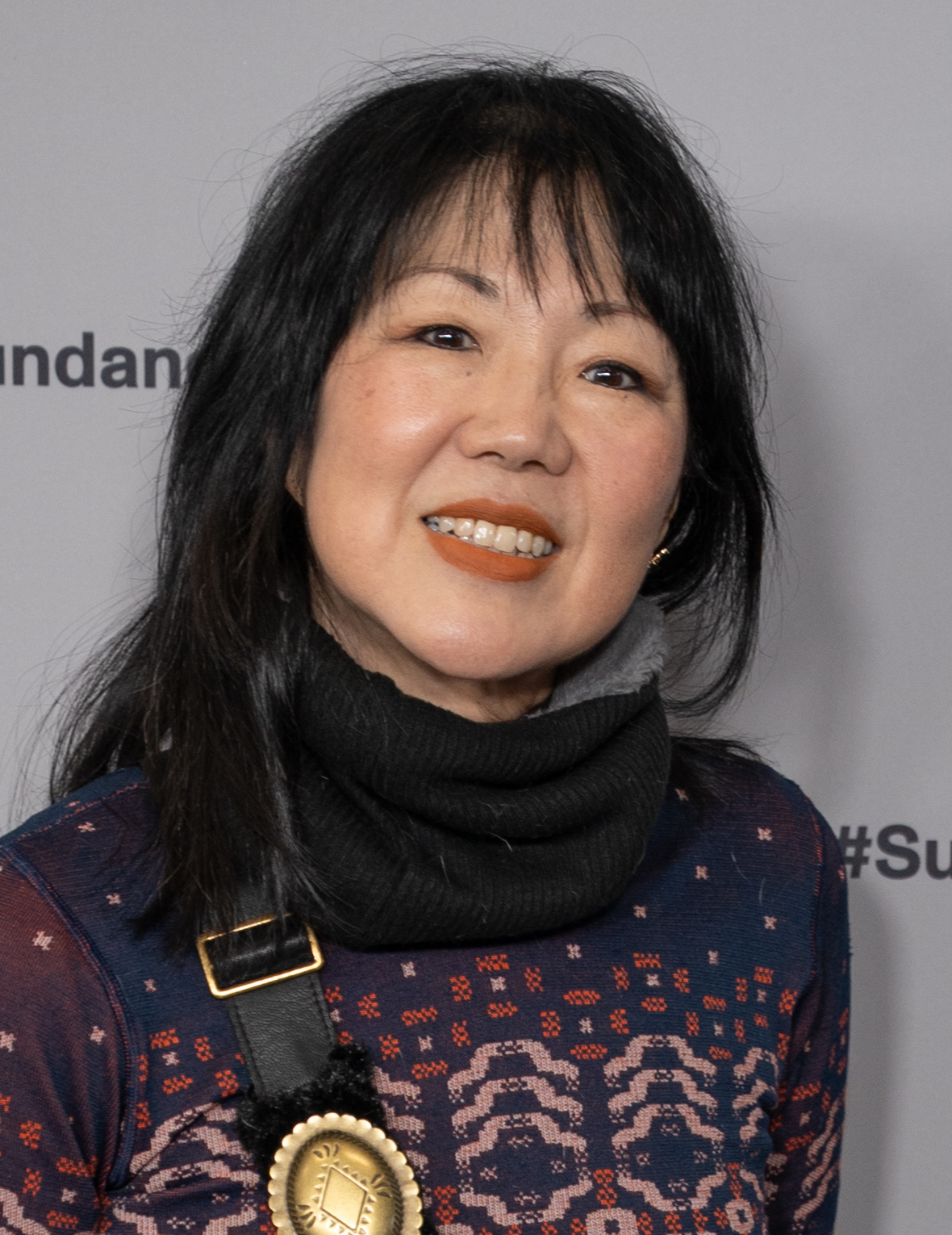
The Short Answer: Margaret Cho Has No Children
Margaret Cho has no children, and the evidence is unusually direct: she has said so herself. In an interview with The Believer, she stated, “I don’t actually have children,” and a profile in The Midst noted that she did not have her own children, while her IMDb biography carries the plain listing “No Children.” There is no competing claim anywhere in the public record, no child ever attributed to her, and no announcement of any kind that would complicate the count. For a performer whose personal life has been unusually public, from her addiction and recovery to her marriage and divorce, the absence of any child in that record is decisive.
The question comes up because Cho’s comedy is deeply personal and family-centered. Her parents, her Korean immigrant upbringing, and her San Francisco childhood are constant material in her stand-up, and audiences who know her family stories naturally wonder whether she has a family of her own in the same sense. She does, in the sense that matters to her material: her parents and her extended family remain central to her life and work. But she has no children, and her own statements leave no room for doubt about that fact.
A San Francisco Childhood
Margaret Moran Cho was born on December 5, 1968, in San Francisco, California, to Korean immigrant parents Seung-Hoon Cho and Young-Hie Cho. Her parents ran Paperback Traffic, a bookstore on Polk Street, and Cho grew up among books, in a neighborhood where her family’s immigrant experience and her own American adolescence collided daily. She has described herself as a lonely, bookish child who found comedy early, performing in school and, as a teenager, sneaking into comedy clubs. By sixteen she was doing stand-up, and by her early twenties she had won a comedy competition and moved to Los Angeles.
The bookstore childhood shaped her voice in lasting ways. Cho’s comedy has always drawn on the tension between her parents’ expectations and her own ambitions, between Korean tradition and American pop culture, and between the daughter her parents imagined and the performer she became. Her father, a minister and writer, and her mother, who worked in the family store, appear constantly in her routines, affectionately and unsparingly. That family material is the foundation of her career, and it explains why audiences feel they know her family so well, even though the family in question is her family of origin, not children of her own.
All-American Girl and the Breakthrough
Cho’s breakthrough came in 1994, when ABC gave her All-American Girl, a sitcom built around her stand-up and her family life, making her one of the first Asian American women to headline a network comedy. The show lasted a single season, from 1994 to 1995, and its failure was painful and public: Cho has spoken about the network’s pressure on her appearance, the creative compromises demanded of her, and the depression and addiction that followed the cancellation. She turned that experience into her most celebrated stand-up material, including the concert film I’m the One That I Want, which reframed the failure as the making of her voice.
From that low point she rebuilt a career that has lasted three decades. She became a fixture of stand-up, released a string of acclaimed specials, acted in film and television, and wrote books, including I’m the One That I Want and I Have Chosen to Stay and Fight. Her television roles include Teri Lee on Drop Dead Diva, a part that used her comic timing and warmth, and an appearance in the 2022 film Fire Island, which introduced her to a new generation of viewers. She has also been a prominent activist, particularly on LGBTQ rights and anti-racism, and her advocacy is inseparable from her public identity.
Marriage to Al Ridenour
Cho married artist Al Ridenour in 2003. Ridenour, known for his work with the Art of Bleeding and the Cacophony Society, was a fixture of San Francisco’s underground art world, and the marriage joined two people from the same countercultural milieu. The relationship later ended in divorce, though sources disagree about the year, with some reporting that the couple parted in 2015 and IMDb listing the marriage as running from 2003 to 2019. Because the public record conflicts, this article states only what is certain: they married in 2003 and later divorced.
No children were born from the marriage, and none has been reported from any other relationship. Cho has been open about her dating life in her comedy, including relationships with men and women, and about her decision to live without the conventional milestones her parents once expected for her. The marriage to Ridenour, like much of her personal life, became material for her work, discussed with candor and humor rather than guarded as a secret. That candor is precisely why the childlessness answer carries weight: Cho does not hide her private life, and a child would be impossible to hide.
Her Own Words on Children
Cho’s statements about not having children are brief and matter-of-fact, which is itself revealing. In The Believer interview, the line “I don’t actually have children” arrives without elaboration, as a simple correction of an assumption. The Midst profile makes the same point in passing, noting that she did not have her own children while discussing her career and her experience of menopause. Neither statement is framed as regret, defiance, or explanation, and that tone matches Cho’s broader approach to her private life: she tells the truth, in her own time, and moves on.
That matter-of-factness stands in contrast to the way celebrity childlessness is often treated, as a mystery requiring a theory. Cho has offered no theory, and none is needed. Her life, as she presents it, is organized around work, activism, friendship, and family of origin, and she has spoken about her parents, her friends, and her audiences with an affection that leaves little doubt about where her emotional energy goes. The absence of children in that life is not presented as a gap, and fans who follow her work closely tend to accept it in the same spirit.
What She Is Doing Now
As of 2026, Cho remains active in stand-up, television, and film, touring regularly and appearing in projects that draw on her decades of experience. Her recent work includes the 2022 film Fire Island and continued stage performances, and she remains a visible voice on issues affecting Asian Americans and LGBTQ people. Her public life continues to center on performance and advocacy, and no announcement of children has ever accompanied any of it. At fifty-seven, with a career spanning more than thirty years, the shape of her life is settled, and children are not part of it.
Her influence, meanwhile, extends well beyond her own credits. Cho paved the way for a generation of Asian American comedians and actresses, and her willingness to discuss failure, addiction, and identity publicly changed what stand-up could hold. Younger performers cite her as a model of honesty, and her early sitcom, once a painful failure, is now studied as a landmark in representation. That legacy, built without children, is substantial by any measure.
Why People Keep Asking
Interest in Cho’s family persists for a simple reason: her comedy is so family-centered that audiences assume the family on stage must include children of her own. Her parents dominate her material, her childhood dominates her stories, and her warmth on stage reads as maternal to many viewers. Added to that is the broader cultural habit of treating a woman’s life as incomplete without children, a habit Cho’s own comedy has spent decades mocking. The question, in that sense, is one her work has already answered: a life can be full of family without containing children.
For readers who came here for a number, the number is zero, stated by Cho herself. For readers who came here for the person behind it, the person is a trailblazing comedian whose family story runs through a San Francisco bookstore, a failed sitcom that became a legend, and a career built on telling the truth as she sees it.
The bottom line on Margaret Cho is a career built on candor, and the children question has a candid answer. She has no children, she has said so herself in plain language, and her biography confirms it at every turn. She was married to Al Ridenour from 2003 until their later divorce, and no child came from that marriage or any other relationship. Her family, as her comedy has always shown, is her parents, her friends, and the audiences she has entertained for three decades, and her influence on Asian American comedy and on honest stand-up is a legacy that needs no nursery to justify it. Fans who know her work know her family well: a bookstore on Polk Street, a mother and father who shaped her voice, and a performer who turned her own life into art without ever pretending it contained something it did not.
Comedy as Family History
Cho’s parents are the most consistent characters in her comedy, and understanding them helps explain why audiences feel so close to her family life. Her father, Seung-Hoon Cho, was a minister and writer, and her mother, Young-Hie Cho, worked in the family bookstore on Polk Street, and both appear in her routines as loving, exasperating, and unmistakably real people. Cho has joked about her mother’s accent, her father’s sermons, and the gap between immigrant expectations and American adolescence, and the jokes work because the affection underneath them is obvious.
That material is also why the children question follows her. When a comedian’s act is built on family stories, audiences assume the storyteller’s own household must look like the stories, with children of her own to joke about next. Cho’s stories, however, run in the other direction: they look backward, to the parents who raised her, not forward to children she might raise. Her family, as her comedy presents it, is the bookstore, the parents, and the San Francisco childhood that made her, and that backward gaze is the point of the act.
Frequently Asked Questions
Does Margaret Cho have any children?
No. Margaret Cho has no children, and she has said so herself: “I don’t actually have children.”
Was Margaret Cho married?
Yes. She married artist Al Ridenour in 2003 and later divorced; sources differ on the divorce year.
What was Margaret Cho’s breakthrough?
The ABC sitcom All-American Girl (1994–1995), one of the first network comedies headlined by an Asian American woman.
Where was Margaret Cho born?
December 5, 1968, in San Francisco, California, to Korean immigrant parents.
Did Margaret Cho’s parents run a bookstore?
Yes. Her parents ran Paperback Traffic, a bookstore on Polk Street in San Francisco.
What is Margaret Cho best known for?
Stand-up comedy, All-American Girl, Drop Dead Diva as Teri Lee, and Fire Island (2022).
Does Margaret Cho have siblings?
Her family story centers on her parents and her San Francisco upbringing; no children of her own have ever been reported.
Sources
- WikipediaBirth, family background, career.
- Margaret Cho official bioOfficial biography.
- IMDb“No Children” listing; marriage to Al Ridenour.
- The MidstInterview: did not have her own children.
- The BelieverInterview: “I don’t actually have children.”