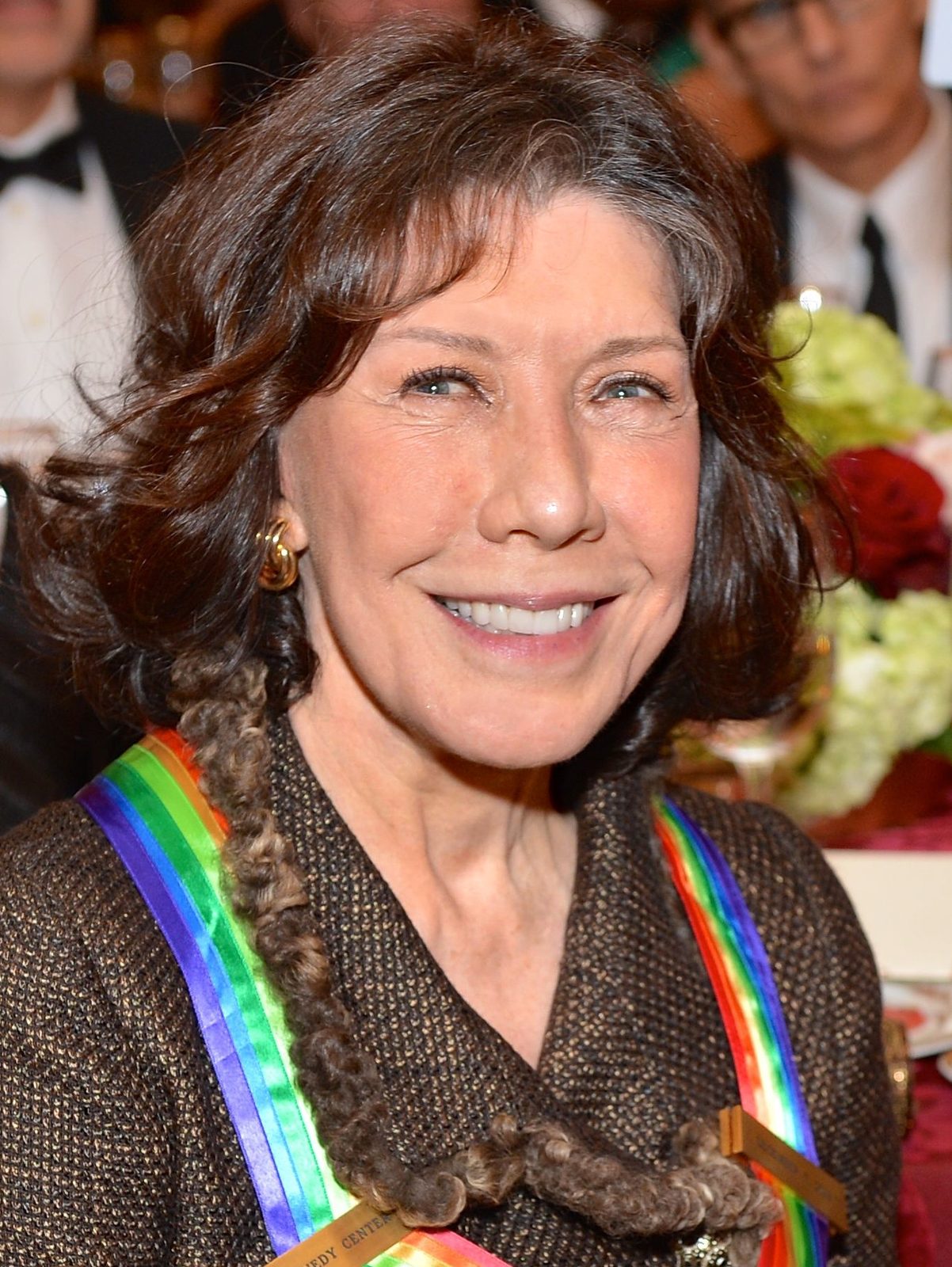
The Short Answer: Lily Tomlin Has No Children
Lily Tomlin has no children, and the record on that point is unusually clear for a performer of her stature. Across a career that began in the late 1960s and has never really paused, there has been no pregnancy announcement, no birth report, and no adoption story attached to her name. Biographies consistently describe her as childless, and Tomlin herself has addressed the subject directly more than once, in interviews spanning four decades. The consistency matters: this is not an absence of information but a settled fact, confirmed by Tomlin in her own words and by the complete silence of the public record on any child.
The question persists because Tomlin has played mothers, grandmothers, and formidable matriarchs so convincingly that audiences assume a large family must exist off screen. Her most famous late-career role, Frankie Bergstein on Grace and Frankie, is a free-spirited mother and grandmother, and her stage and film characters have often been nurturing, eccentric, or both. None of that reflects her private life. Tomlin’s household, for more than fifty years, has been built around her partnership with Jane Wagner, her work, and her friendships, and she has described that life as full without ever treating childlessness as something that needed defending.
From Detroit to Laugh-In
Mary Jean Tomlin was born on September 1, 1939, in Detroit, Michigan, and grew up in a working-class household during the final years of the Depression and the Second World War. She attended Cass Technical High School and then Wayne State University, where she first studied biology before drifting toward theatre, a change of direction that would define her life. After college she moved to New York, working in off-Broadway productions, nightclubs, and small television spots, developing the characters that would make her famous: sharp, observant women drawn from everyday life, from switchboard operators to precocious children.
Her breakthrough came in 1969, when she joined the cast of Rowan & Martin’s Laugh-In, then one of the most popular shows on American television. As Ernestine, the snorting telephone operator who delighted in tormenting callers, and Edith Ann, the knowing five-year-old in a rocking chair, Tomlin became a national figure almost overnight. She stayed with the show until 1973, and the characters entered the culture so deeply that Ernestine’s catchphrases were quoted in offices across the country. By the time she left Laugh-In, Tomlin was no longer a promising comic but a star, with a record album, television specials, and a film career ahead of her.
A Career Without a Pause
Tomlin’s film career began with Robert Altman’s Nashville in 1975, which earned her an Academy Award nomination for Best Supporting Actress, and continued through The Late Show, All of Me with Steve Martin, and Big Business with Bette Midler. On stage she won Tony Awards for her one-woman shows Appearing Nitely in 1977 and The Search for Signs of Intelligent Life in the Universe in 1986, the latter written by Jane Wagner and built from characters Tomlin had refined over years of performance. The stage work, in particular, showed the range that television sketch comedy could only hint at: Tomlin could hold an audience alone for two hours, shifting between a dozen characters with nothing but a chair and a voice.
Later generations know her best from television. She played Debbie Fiderer on The West Wing, appeared in Desperate Housewives and Eastbound & Down, and then, from 2015 to 2022, starred as Frankie Bergstein on Grace and Frankie opposite Jane Fonda. The Netflix series, about two women whose husbands leave them for each other, became one of the streaming era’s longest-running comedies and introduced Tomlin to viewers who had never seen Laugh-In. Through every phase, her work schedule stayed intense, with touring, recording, and filming filling the years that, for many performers, become family years.
Fifty Years with Jane Wagner
Tomlin met writer Jane Wagner in 1971, and the two have been partners ever since, one of the longest relationships in American entertainment. Wagner wrote much of Tomlin’s most celebrated material, including The Search for Signs of Intelligent Life in the Universe, and the two built a creative partnership that was also a life partnership, long before same-sex marriage was legal anywhere in the United States. They kept the relationship relatively private for many years, in an era when openness carried real professional risk, and Tomlin came out publicly in the 1970s in interviews, a step that took considerable courage at the time.
When same-sex marriage became legal, the couple married on December 31, 2013, after forty-two years together. Tomlin has spoken about the wedding with characteristic dry humor, noting that after so long together, the ceremony changed little about their daily life but meant a great deal anyway. Wagner remains her closest collaborator and the person with whom she has shared every major decision, including the decision about children. Their life together, by every public account, is a partnership of equals: two writers and performers who built a career and a home side by side.
Her Own Words on Not Having Children
Tomlin has been unusually direct about childlessness, and her explanations have stayed consistent across the decades. In a 1973 appearance on The Tonight Show, Johnny Carson raised the subject, and Tomlin discussed it without embarrassment. In a 2006 interview with Metro Weekly, she said she did not have room in her life to raise children without shortchanging the child, a formulation that reveals a great deal about her standards: she was unwilling to have a child she could not give her full attention to, and her career, by her own account, demanded that attention. In 2015, speaking to The Guardian, she was blunter still, saying she was glad she and Wagner did not have children.
She has also mentioned, in passing, that the couple once considered Wagner’s nephew as a sperm donor, an idea they did not pursue. The detail is telling because it shows the decision was considered rather than accidental: Tomlin and Wagner thought about parenthood, weighed it, and chose otherwise. There is no note of regret in her public statements, only a calm certainty that reads, across fifty years of interviews, as one of the most settled positions in her public life. Fans who admire her work often quote these remarks because they are rare: a famous woman stating, without apology or qualification, that she chose not to be a mother.
Life Now
As of 2026, Tomlin remains active, with Grace and Frankie’s seven-season run behind her and a legacy that spans sketch comedy, film, Broadway, and streaming television. She has received the Kennedy Center Honors, the Mark Twain Prize for American Humor, and a place in the Television Hall of Fame, and her characters remain part of the American comic vocabulary. She continues to appear in interviews and at events with Wagner, and her public life retains the same shape it has had for decades: work, partnership, and a circle of close friends, including Jane Fonda, her Grace and Frankie co-star.
The stability of that life is part of why the children question has a stable answer. Tomlin’s circumstances have not changed in a way that would change the count: she is in her eighties, long married, and long past the years when a first child would be expected. No new announcement is plausible, and none is needed. Her story is complete as it stands, a career of extraordinary length and a partnership of extraordinary duration, neither of which required children to feel finished.
Why People Keep Asking
The question endures for reasons that say more about audiences than about Tomlin. She plays mothers so well that viewers conflate the performance with the person, and Grace and Frankie, in which she is a grandmother many times over, only deepened that impression. Celebrity culture also still treats motherhood as a default chapter for women, so a famous woman without children draws a question that a famous man without children rarely faces with the same persistence. Finally, Tomlin’s own openness about the choice keeps the conversation alive: because she has answered it honestly, interviewers keep quoting her, and new audiences keep discovering the quotes.
Tomlin’s handling of the topic offers a useful model. She has never treated childlessness as a wound, a secret, or a political statement, but simply as a fact about her life, stated plainly and left alone. For readers who came here for a number, the number is zero. For readers who came here for the person behind it, the person is one of American comedy’s great originals, whose family is the wife she has loved since 1971 and the characters she has given the culture for more than half a century.
The bottom line on Lily Tomlin is a life chosen deliberately and lived without apology. She has no children, she has been with Jane Wagner since 1971 and married to her since 2013, and she has said, in her own words, that she is glad they did not have children, because she did not have room in her life to raise a child without shortchanging the child. Her career, from Ernestine on Laugh-In to Frankie Bergstein on Grace and Frankie, gave audiences some of the most memorable comic characters of the last fifty years, and her partnership with Wagner gave her the collaboration and companionship that shaped that work. Fans who remember her as a screen mother are remembering a performance, not a biography, and Tomlin herself has always kept that distinction clear. Her life is a reminder that a family can be two people, a shared body of work, and a half-century of devotion, and that zero children can be a complete and happy answer.
A Partnership That Shaped Her Comedy
Jane Wagner’s role in Tomlin’s career cannot be overstated, and it helps explain the shape of Tomlin’s life. Wagner wrote the one-woman show The Search for Signs of Intelligent Life in the Universe, which won Tomlin her second Tony Award in 1986, and she wrote much of Tomlin’s television and stage material across five decades. The partnership was creative before it was legal, and it produced work that neither woman could have made alone: Wagner’s writing gave Tomlin’s characters their philosophical depth, and Tomlin’s performance gave Wagner’s words their comic timing and warmth.
That creative marriage is also why Tomlin’s answer on children feels so settled. Her household was, from 1971 onward, a working partnership between two writers and performers, with a shared body of work as its center. Fans sometimes ask whether a woman with such a long partnership must have wanted children, but Tomlin’s own statements answer that directly: she and Wagner considered it, chose otherwise, and built a life around work, friendship, and each other that has now lasted more than half a century.
Frequently Asked Questions
Does Lily Tomlin have any children?
No. Lily Tomlin has no children, biological or adopted.
Who is Lily Tomlin married to?
Writer Jane Wagner. They have been together since 1971 and married on December 31, 2013.
Why did Lily Tomlin not have children?
She has said she did not have room in her life to raise children without shortchanging the child, and that she is glad she and Wagner did not have children.
What is Lily Tomlin best known for?
Rowan & Martin’s Laugh-In (1969–1973) as Ernestine and Edith Ann, and Grace and Frankie (2015–2022) as Frankie Bergstein.
Did Lily Tomlin win a Tony?
Yes, two: for Appearing Nitely in 1977 and The Search for Signs of Intelligent Life in the Universe in 1986.
When was Lily Tomlin born?
September 1, 1939, in Detroit, Michigan.
Did Lily Tomlin and Jane Wagner ever consider having a child?
Tomlin has said they once considered Wagner’s nephew as a sperm donor but did not pursue the idea.
Sources
- WikipediaBirth, Laugh-In, Grace and Frankie, marriage to Jane Wagner.
- The ListChild-free reasoning and quotes.
- BustleBecoming a mom was never her aspiration.
- Kennedy CenterCareer biography.
- BritannicaCareer and biography.