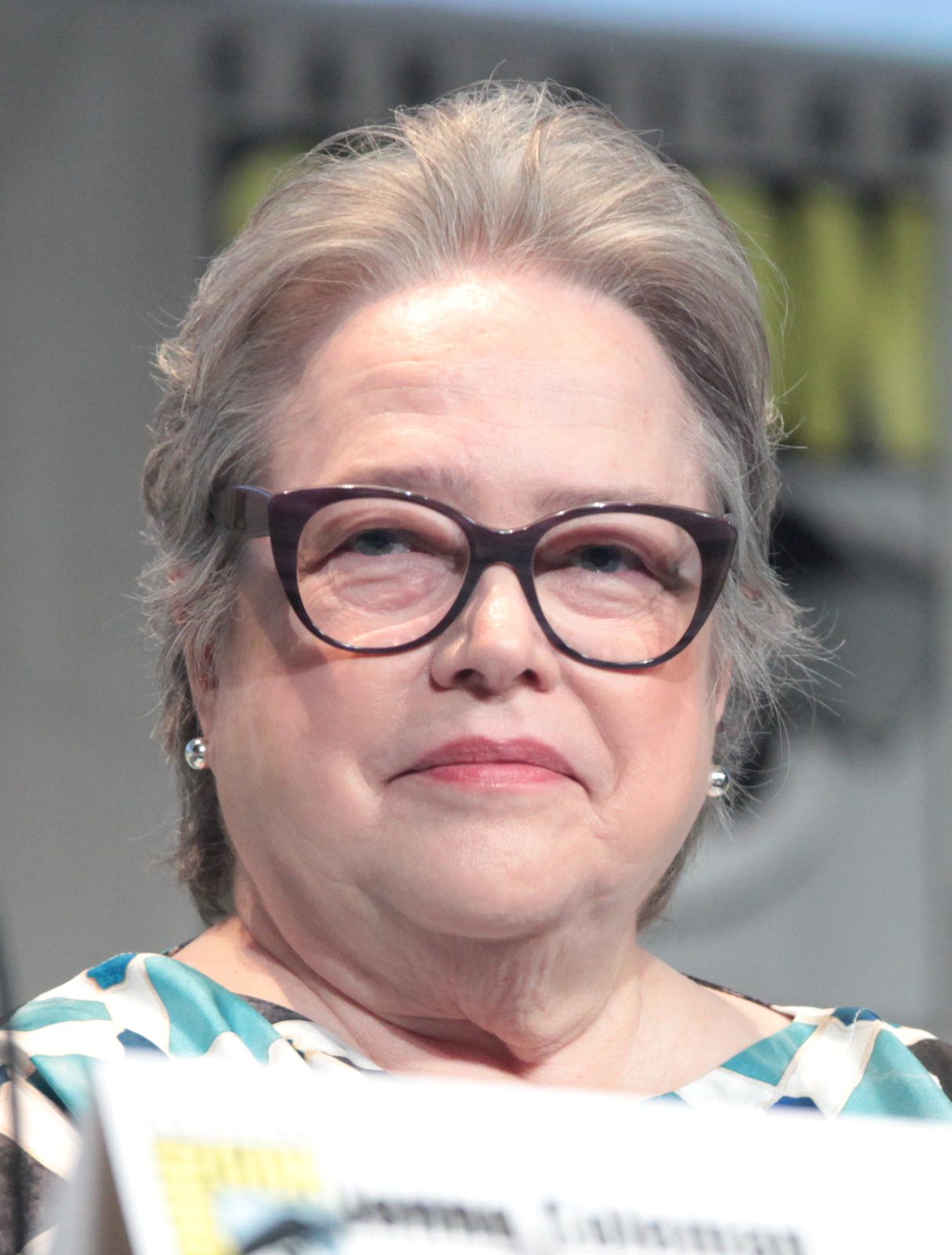
The Short Answer: Kathy Bates Has No Children
Kathy Bates has no children, and she has said so in her own words, without hedging. “I didn’t have kids,” she has told interviewers, adding, “I certainly chose not to have children. I didn’t want that.” The quote is the definitive answer because it frames the fact as a choice rather than a circumstance: Bates did not miss out on motherhood, she declined it, and she has lived with that decision across a long, full life. No child, stepchild, pregnancy, or adoption has ever been publicly linked to her, and no credible report has ever suggested otherwise.
The directness is typical of Bates, an actress known for playing formidable women who say what they mean. It is also useful for fans, because Bates has played mothers so often, from Molly Brown in Titanic to the title-adjacent maternal figures of her television work, that audiences sometimes assume a family off screen to match. The reality is different: Bates’s family is her two older sisters, her extended relatives in Tennessee, and a wide circle of friends and collaborators, and she has described that life as complete, busy, and chosen.
A Memphis Childhood
Kathleen Doyle Bates was born on June 28, 1948, in Memphis, Tennessee, the youngest of three daughters of Bertye Kathleen, a homemaker, and Langdon Doyle Bates, a mechanical engineer. Her great-great-grandfather was an Irish immigrant to New Orleans who served as President Andrew Jackson’s doctor, a family story Bates has repeated with pride. She grew up in Memphis, graduated from White Station High School, and attended Southern Methodist University in Dallas, where she majored in theatre, joined the Alpha Delta Pi sorority, and graduated in 1969.
Bates moved to New York City in 1970 to pursue acting, a decision that set the pattern for her adult life: work first, pursued with single-mindedness, in a city that rewarded persistence slowly. She landed minor stage roles, then her first screen role in Taking Off in 1971, then her first Off-Broadway role in Vanities in 1976. The years were lean, and Bates has said she learned to live cheaply, work constantly, and wait, lessons that would serve her when fame finally arrived two decades later. Motherhood, during those years, was simply not part of the plan she was executing.
Misery and an Oscar
Bates’s stage career earned her a Tony nomination for Marsha Norman’s ’night, Mother in 1983 and an Obie Award for Frankie and Johnny in the Clair de Lune in 1988, but it was film that made her famous. Her performance as Annie Wilkes, the terrifying fan who holds a writer captive in Misery in 1990, won her the Academy Award for Best Actress and remains one of the most celebrated horror performances in cinema history. She was forty-two, with twenty years of professional work behind her, and the Oscar transformed her from a respected stage actress into a movie star.
The roles that followed confirmed her range: Fried Green Tomatoes in 1991, Dolores Claiborne in 1995, Molly Brown in Titanic in 1997, and Oscar-nominated turns in Primary Colors in 1998, About Schmidt in 2002, and Richard Jewell in 2019. She has also directed television, won two Emmys, and, in recent years, starred as the title character in the CBS series Matlock, a late-career triumph that introduced her to a new generation. Through all of it, she has worked without the interruptions or obligations of parenthood, a fact she has linked, matter-of-factly, to her ability to take any role, anywhere, at any time.
Marriage to Tony Campisi
Bates’s only marriage was to actor Tony Campisi, whom she married in 1991, the year after her Misery Oscar, and divorced in 1997. The marriage coincided with the busiest period of her film career, and it ended, by all accounts, without children and without public acrimony. Bates has rarely discussed Campisi in detail, and she has never suggested that the marriage’s end, or its childlessness, was a source of lasting regret. No later relationship has produced children either, and Bates has not remarried.
The brevity of the marriage, six years against a seventy-eight-year life, is part of why Bates’s story reads differently from many of her peers. Where other actresses’ biographies are organized around husbands and children, Bates’s is organized around roles, awards, and survival, including her recovery from ovarian cancer diagnosed in 2003 and from breast cancer later. She has spoken about those health battles with the same bluntness she brings to motherhood, describing them as things she faced, survived, and moved past, without turning them into a narrative about what might have been.
A Choice, Stated Plainly
Bates’s statement, “I certainly chose not to have children. I didn’t want that,” is notable for its lack of justification. She does not blame her career, a partner, or a medical issue, and she does not offer a philosophical treatise on motherhood. She simply did not want children, and she built a life around that fact, a life that includes close relationships with her sisters Mary and Patricia, with nieces and nephews, and with a wide circle of friends in theater and film. For women who feel pressured to explain childfree lives, Bates’s example is bracing: sometimes the explanation is just that, and it is enough.
That example has resonated with fans who admire Bates precisely because she refuses to soften her positions. She has played women who are kind, cruel, funny, and terrifying, often in the same performance, and she brings the same refusal to perform a more palatable version of herself in interviews. When she says she chose not to have children, audiences believe her, because Bates has never given them reason not to. The choice is not a mystery to be solved; it is a fact to be accepted, stated by the only person qualified to state it.
Health Battles and Resilience
Bates’s life has included serious health challenges that she has faced publicly and survived. Diagnosed with ovarian cancer in 2003, she has said she made a full recovery, and she later faced breast cancer as well, undergoing treatment and speaking about it with characteristic openness. She has also lived with lymphedema, a chronic condition following cancer treatment, and has advocated for awareness and research. These experiences, she has said, deepened her appreciation for life and for work, and they did so without reframing her childfree choice as either a cause or a consolation.
The resilience Bates showed in illness mirrors the resilience she showed in her career: decades of waiting for recognition, followed by decades of working at the highest level, all without the family structure that many performers rely on. She has credited her sisters, her friends, and her own stubbornness with carrying her through, and she has said that the theater community, in particular, functions as a kind of family for people who choose lives outside the traditional mold. It is a community she has belonged to since 1970, and one she still leads.
Why Fans Ask, and What the Answer Means
Fans ask because Bates is seventy-eight, beloved, and maternal on screen in ways that invite curiosity about her off-screen life. Her role in Matlock, as a wily lawyer who outsmarts everyone in the room, has brought her a new, younger audience, and that audience, discovering her filmography, naturally wonders about the woman behind the roles. The answer, when they find it, is refreshingly uncomplicated: Kathy Bates has no children, chose not to have them, and has said so herself.
For readers who came here for a number, the number is zero. For readers who came here wondering whether that number represents sadness, the evidence points the other way: a five-decade career, an Oscar, two Emmys, two Golden Globes, a Tony nomination, a hit series at seventy-six, and a life lived, by her own account, exactly as she wanted it. Kathy Bates did not have children because she did not want them, and she has never asked anyone to feel sorry about that, least of all herself.
Frequently Asked Questions
Does Kathy Bates have any children?
No. Kathy Bates has no children, and she has said she chose not to have children: “I certainly chose not to have children. I didn’t want that.”
Was Kathy Bates married?
Yes, once. She married actor Tony Campisi in 1991 and divorced in 1997. No children came from the marriage, and she has not remarried.
What role won Kathy Bates an Oscar?
She won Best Actress for playing Annie Wilkes in Misery (1990), with later nominations for Primary Colors (1998), About Schmidt (2002), and Richard Jewell (2019).
Did Kathy Bates have cancer?
Yes. She was diagnosed with ovarian cancer in 2003 and has said she made a full recovery; she later faced breast cancer as well and has advocated for lymphedema awareness.
Where was Kathy Bates born?
She was born June 28, 1948, in Memphis, Tennessee, the youngest of three daughters, and studied theatre at Southern Methodist University, graduating in 1969.
What is Kathy Bates starring in now?
She stars as the title character in the CBS series Matlock, a late-career hit that began when she was seventy-six.
Does Kathy Bates have siblings?
Yes. She is the youngest of three daughters, with two older sisters, Mary and Patricia.
Sources
- WikipediaBiography, birth date, Misery Oscar, marriage, cancer recovery.
- ParadeChildfree-by-choice remarks.
- Biography.comCareer and personal-life overview.